Author: SamyuktaPoetry Page 4 of 5

Tali Cohen Shabtai

I once saw a poster that read, “A woman who reads is a dangerous creature.” It made me smile. Truth is often as simple as that. I had an addendum- Beware the woman who dares. I stop that statement there because, while there are writings and writings-  the sort that grabs you by the collar and drags through the mire requires courage. It is that sort of writing that bleeds out of you after you howl at the moon and slice your eyeball with a paper-thin razor. 

When I first read Tali Cohen Shabtai, I thought of Frida Kahlo. The wilderness of colours that pervaded Kahlo’s art, the way her body was an ambassador of her art and how the person in totality was art. And when I went through Tali’s collected works- I found I was not far off the mark. 

Inebriated/ Also a poet
That with him we looked like Diego Rivera and Frida Kahlo….

These are the opening lines of one of her poems from her bi-lingual collection, Protest. 

The more I read her, the more I began associating her with the sort of lineage that gave us poets such as Eavan Boland and Hollie McNish. The sort that carry the ghosts of Plath, Sexton, Rich, Angelou. Those that disrupt the conventional lines of what poetry by ‘women’ must sound like.

As an Israeli who has lived in many places, the memories of her heritage and legacy lie heavy on her hands as she interrogates the meaning of her nationality, her identity and what it signifies to the world. Rarely does one see a poet ask

I sought an immersion of my bones
From a different nation
I left the bounds of Isssrael.

This time free, shouting, enjoying myself.
How did you know to have intercourse with me for years, Israel?

(I offered myself to Tourists)

But Tali does more than to interrogate the effect that nations and histories have on the minds and bodies of people. She draws maps to her bodies and invites worlds to come reside in her. And has an uncanny knowledge of the ways minds work.

They wonder
If I behave
The way I live
My poetry
Much more
Maiko

(From the collection Protest)

This wonderful awareness brings to mind the beautiful abandon that is so much the part of the philosophy of Lady Gaga, that icon of personal liberty in the twenty-first century. In the world of suits and power dressing, Tali shimmers in Samba attires. And that is welcome.

There is a wonderful, vibrant poetic culture that stems from Israel, that goes beyond the immeasurable expressions of Yehuda Amichai, Dan Pagis, Dahlia Ravikovitch and Michal Govrin- some of Israel’s biggest names.

At poetry festivals in Israel, some of them organized by the poets themselves, thousands gather to reminisce in verse the history of violence, wanderings, displacement, pain, love and other gratifications. These narratives are powerful and evocative and carry their geographies and interrogations. There is something distinctive about poetry from and about Israel. The questions seem tinged with red, love is written with an iron nib, the smell of earth permeates everything. There is a primal feel to the way the poets sing of everything from God to land to food.

In the beginning God created
the heavens that really are not
and the earth that wants to touch them.
In the beginning God created
threads stretched between them
between the heavens that really are not
and the earth crying out.
And the man he created
the man who is a prayer and a thread
touches that which is not
with a touch of softness and light.

Rivka Miriam (In the Beginning)

Or this that comes from one of the forces to reckon with

It’s August. The only thing to breathe is everybody’s stains
Sometimes when I board a train
Or just stand along the empty platform—
Sometimes when I'm thirsty, I mean really dying of thirst

Jessica Greenbaum (The Yellow Star that Goes with Me)

The modern writers in a sense bridge the gap Israel and the world as they write of violence and unrest across the world that speaks the same language across continents.

Once in a village that is burning
because a village is always somewhere burning
And if you do not look because it is not your village
it is still your village

Elana Bell (Your Village)

These are some of the noteworthy female poets of Israeli origin. I thought it would be better to concentrate on the female-identifying voices for this post. By no means is this account exhaustive, but it offers an insight into the cadences of verse from the region. The ways that displacement is interwoven into lines about love or moonlight are a testimonial to the unhomed, who are never at peace. Their quest, their journeys still continue across deserts and mountains and oceans. There is the realization that much of these will have to part to bring the departed and living to their homes.

To love is to tell the story of the world. There was
an ocean with a boat mountains a meadow too painful to stare
at directly. Haven’t I been here before? Yes. No: not quite here.

Nomi Stone (On World making)

I have wondered if poetry truly speaks a universal language and if the ideas in one language are perfectly comprehensible in another and if poems written in one language, translated into another and read by the light of a third can make sense. These poems made me realise that it is not about the language at all- it is about the intensity of experience, the sensibilities that waken to pain, love, envy- words that stir in the soil composed of hopes, dreams, ambitions and lives trampled underfoot- the memory of rot, decay and flowers – all of which coalesce into spaces where it is rocks that bloom on the branches of plants and memories are irrigated with tears and blood. These are human experiences. These are lines of poetry growing in fields that are littered with laughs, rainbows and rib cages. What’s not to identify and understand when a woman/ poet says,

In your world I’m in fifth place
after the one in power
after the generation that is sorta new
after the Mizrahi who enters the fucking pantheon
after the radicals who come after.
You sit in circles
and never shut up.
Fifth place my ass,
Mizrahi women will write a million poems.

Tehila Hakimi (Fifth Place)

Or when Agi Mishol, writes of those insidious cycles that govern life on earth:

On the kitchen
counter

the goat-eyed
cat
carries a blue-feathered
bird
already dead
the beak still
in a pincer grip
on a pomegranate twig

each of us holds
something
in our mouths.

(Blue Bird)

And while talking about the politics of language and comprehending cultures in translation, the opening lines of  the winner of this  year’s Man Booker International comes to mind. I was ten and stopped taking off my coat. That morning, Mum had covered us one by one in udder ointment. It came out of a yellow Bogena tin and was normally used to prevent dairy cows’ teats from getting cracks, calluses and cauliflower-like lumps. This was the first I was hearing of udder ointment on faces! But sitting vigilant near the corpse of a loved one- in case it was all a mistake and they decide to wake up, won’t be something I encountered for the first time in The Discomfort of Evening. I came with that knowledge ingrained.

The pain was shared.

The poetic oeuvre from Israel must be discussed widely in terms of the vast landscapes it covers and the diaspora that sends in its writing from the world over. Notable names such as Navit Barel, Tal Nitzan, Hagit Grossman have a significant impact on the way verses have highlighted the fragmented lives of this country.

Tali Cohen Shabtai, produces a potent cocktail of narratives and a shamanic energy that permeates everything she touches. Her words seem incapable of standing still on the page. They flicker, sizzle and throw bizarre shadows on the walls. Words seem incidental to this poet as she seems to be able to communicate through energy.

I build tactics
While you sleep
On how to admit
To my crime
We make love
Between
Your Carnival
And my War

(Gyur)

It is here that I leave you to shoot up on the inimitable poetry of Tali Cohen Shabtai, a persona who is at once everywhere and nowhere. And it is fitting- as she comes from a land that since the beginning of some concepts of time has been a dream that was dreamt of so ardently that people parted oceans, crossed deserts and yet haven’t arrived at. Like all those promises.

Ideology as a way of life

Women like me, yes
have been added over the years to overshadow
what preceded us
that is mostly
not in line
with our agenda.

The accepted wording is
not what
will satisfy our desires –

Desires? Ours? Well then, I write
in the female first person plural
so as not to sound
as one who sins with pretension
as an individual woman,
however
I do not have many female friends for this journey
and those who have already passed
through a station or two
according to
the
fixed
rules
of society

A woman like me
tries
to stay free
from society
and at the same time
to be in it
with boycotts in double-digit ages
until the arrival
of the adolescence age
and beyond

I bear this bitter
in
sult
so far.

So! Spare judging
me
that “Cohen Shabtai
has rules
of her own…”
as Amos Levitan* wrote about me.

I came
with the goal of
satiating inspirations
based on
my theories

Therefore
I collect poems of the margins of humankind,
since
they have a greater potential
to waver from
the conventions –
just like me!
With 50 cents
in my wallet
I
live my own actions
lest
my inarticulate mouth
will be passed over and my eyes?
My eyes are blinded.

Women like me, particularly
at the beginning of
the fifteenth century
were persecuted and burned
for being independent and strong
at the Catholic church’s instruction

Nowadays? You can petition
the High Court of Justice.
So it is for a woman like me

*A well-known Israeli poet and editor.

Sunset before sunrise

This sounds to me sloganistic if nice to write, yet
not patently accurate and can even be interpreted
as lowering the value of
the intelligence
that knows a thing or two about ‘rising.’

By the way,
I checked this statement at twighlight
the sunset was even observed
in “Cogan Marina” in Oslo.

And the sunrise the following morning amounted to an incline that I trod and rose from a flat, slightly elevated footpath that can be climbed by foot and reach a level
slightly higher by a few centimeters between each stair.

Secondly, there is no necessity for the sunset I
feel it covering itself every evening between my breasts
beyond the western horizon
watching from within the earth while I am
in the east.

So it is true
some phenomena occur with the rising of the sun
such as
as we rise higher, the atmosphere is thinner at a height of a few hundred meters and then it dissipates into space

and there are also those who believe that the sun’s red color at sunset is explained by the sun passing in the evening over hell and in the morning at sunrise over the roses of
paradise
and this is indeed a nice allegory.
– but –

In order to remain sane
immediately after sunset I adopt the time between the suns – time between day
and night
that ends with the stars’ coming out
When I rise for the shacharit morning prayer and recite the blessing “I thank you in front of you,” opposite a hazy
mirror

Observing every wheel of the sun under the line
of view is a creation that many
have knowledge of

It is known that in the Jewish halacha (ritual law) that the time of the sunset determines the timeline for various commandments, such as the mincha afternoon prayer,
or when the Sabbath
commences

For me? It’s just sunset

I am Tali

I read prose only in the third person,
and only translated prose,
poetry, I also read in Hebrew.

I love Wislawa Szymborska, she copies in written word
the creation
in a brilliant fashion, and was recognized during her lifetime and was not among
the female poets who danced the ‘dance of death in life’
for that I lowered her credit.

I think it’s impossible to tag in one breath! A contemporary poetess with
characters that preserved the myth of the ‘cursed poetesses’. For they are
found only in the underground or tomb
There is no negotiation with this judgement

Mainstreamism repels me.
Bestsellers I do not touch.
I love nonfiction books.
Newspapers do not count at all as the writing and reading genre.

And my therapist I address in the second person singular
while omitting the third degree: “doctor”, it’s ok, it’s acceptable –
many poetesses have sat in my chair in front of him
Anne Sexton, Sylvia Plath,
and those who ended up as their own hangman.

I often write in the first person singular and also to talk
It is
my way to circumvent
myself from afar.

And do not ask what I often write about! I do not like rhetorical questions that belittle my intellect

Such a therapist

I play games in my mind – behind papers never
Written about the tired person I am –

She’s trying to praise my grief
On papers gone to early retirement
On shelves of book stores
Where the bourgeois are the first clients to borrow
The fairy tale that’s posted in Friday’s edition of a
Leftist Magazine

She’s trying to decorate me with
A lower analogy of R.I.P. poets
Who produced the best comedies
Of their life
By blank papers and faked orgasm
And ending
As their own hangmen

But She, She must be warned! It’s a static position!

« A woman who gets lost,
Lost
In translation »
Will never be tested twice
Not in this scenario
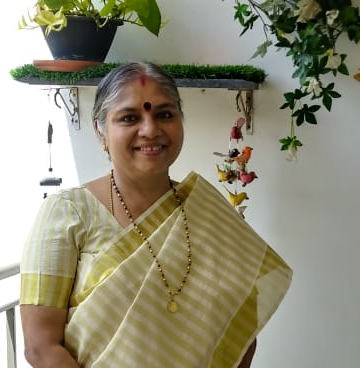
Tali Cohen Shabtai was born in Jerusalem and has lived in places like Norway and the USA. She has three collections of poems to her name, of which Purple Diluted in a Black’s Thick and Protest are bilingual. The third is Nine Years From You. Her fourth book is slated for release in 2020.

Onam

There are some times in the lives of most Malayalis (people who hail from the Indian state of Kerala) when despite their best efforts at being glitzy and jet setting, the call of their roots becomes impossible to ignore and even the most hardened global citizens among them long for their share of slurpy curries and tapioca or jackfruit in their many delicious versions. 

Come Onam and the nostalgia factor rises quite a few decibels. Onam is the harvest festival of Kerala. The festival lasts for ten days and marks the first ten days of the month of Chingam- technically, it is the Malayalam New Year. In the past years, Onam in the state would reach fever pitch with news channels beaming visuals of crowds thronging shops for last minute purchases- especially on the eve of Onam- which is called Uthrada Paachil (or frenzy on Uthradam day). The crowds would be out in full force on the streets and the State government organizes special programmes for all the ten days, the inaugural and closing ceremonies compete with each other in terms of grandeur.  The festival attracts tourists and the famous snakeboat races happen around this time. There are food fests, stalls selling everything from spoons to safety pins to anti-acne cream and ant repellent chalk (sure, they are available on non-Onam days too, but this time, they can be purchased in the same breath and the fact that you purchased it during Onam makes it exciting- there is that magic in the air that makes these odd acts strangely appealing)

The major cities are decked up, government offices are lit up with fairy lights, there are fairs on most public grounds, gaanamelas– concerts featuring film or popular songs- (which are interestingly called light music- as opposed to all the other by contrast, heavy music? Trust me, one has to be Malayali to understand. And must have witnessed at least one University Youth Festival). These gaanamelas are free- held on open grounds or on improvised stages in the parking lots of government offices. The singers, accompanied by an orchestra belt out number after number- sometimes they are very good, sometimes, birds drop dead from their perches. But there is always an audience. I don’t know if it is because of the festive spirit or because the Malayali can never pass up anything free being handed out. 

There is more to Onam than being just a harvest festival or a way for what is an acknowledged  consumer state to consume more and more. There is a story and as always, there is more to that story than what meets the eye. And like all good stories, there is a King, a rival and the general public who as usual have no say in anything that matters. Sounds very contemporary? Any association is purely in the mind of the reader. And thereby hangs a tale. 

It did not feel right in my mind- a ten year old mind- when I first heard the story of Maha Bali, Vamanan and Onam. Brought up for the first nine years of my life in a state of literally no cultural awareness thanks to a badminton game-like existence between Bombay and a small village on the border between Kerala and Tamil Nadu, I placed a strong faith in the Ramayan and the Mahabharat in the era of Doordarshan. I trusted Christ, Sri Ram and them gods and goddesses of the pantheon with equal fervour and knew only what Doordarshan and Amar Chitra Katha taught me. Subsequent researchers have told me what a grave mistake that had been. 

It was when I went off to Oman to lead the next leg of my cosmopolitan life that I began to have questions. My first formal introduction to Onam was at age ten. My father being the Malayali that he is, would insist on preparing the Onasadya every year. To those who do not know what that is, it is an extremely tedious, but, admittedly delicious lunch that involves cooking curries of varying degrees of complexity, there are courses of the meal, right from the crispy sweet and salted banana chips to the pickles and chutneys, to the mounds of rice that have a main curry poured over it, then you can mix and match it with an assistant curry of your choice, this is repeated at least thrice in the course of the meal, there are infinite kinds of desserts (payasam) that follow…sorry flow onto your banana leaf (the sadya is eaten on this leaf) sometimes as ordinary as semiya payasam or ada payasam or sometimes, soy bean, quinoa, beetroot, bitter gourd (yes…again yes…) payasam all this can be mashed with a banana- which is also part of the feast. Then there will be the obligatory rice and curry routine- this time curd based or sour- to balance the palate. And then digestives. 

The sadya is thus eaten. And then its time for a siesta. Dinner is more of the same and so are all subsequent days till the curries are over. The great thing about this sadya in my house was that my father would do it all with minimal involvement from my mother. I was his hapless assistant and would be given all sorts of tasks like chopping the cashews, keeping watch on things set to boil, fetch and carry…and one year, while the vegetables were cooking and the ghee was ready in the uruli for the payasam, he told me the story of the Asura (Demon)King, Maha Bali who conquered the netherworld and the Earth and had set his sights on Heaven and how Maha Vishnu, the great preserver of the cosmos, came to him in the form of  a Brahmin dwarf by the name of Vamanan and asked for three steps of land. The king readily agreed as he was in the midst of a Yagna for his final victory- over the heavens- and so could not refuse the Brahmin. Upon being granted permission to measure and claim his three steps of land, Vamanan grew to his actual cosmic size and in one step covered the heavens and in the next, the earth and raised his foot and asked the king where he should place it because there was no place left. The outwitted king offered his head. Vamanan placed his foot on the king’s head and pushed him into the underworld where he ruled. He accepted the terms and agreed to stay there and asked to visit his people once a year. So, on Onam, it is believed that Maha Bali comes visiting his subjects and they cook whatever they have harvested to offer up a feast and welcome him. 

Applying a child’s logic to all this, I found it odd that a demon king behaved in the most un-demon like manner and let a god trick him into submission. And if restoring righteousness was the main objective behind tricking and defeating demons (as countless similar stories of conflicts between asuras and devas taught us), then why is this demon king asking to see his people once a year? And why were these people lining up to welcome him?

But in the general swirl of curries and payasams and my father’s nostalgia, these doubts sank. Years later, as the only resident of the college hostel who did not go home to her local guardians for the ten-day Onam vacations, I was invariably invited to saunter down to the kitchens and eat what I liked. On Onam, I would request the nuns to let me stir the payasam because that’s what I would have done had I been home. In my mind, like my father, I too was in a state of exile. 

Onam is, in a way, the signature festival of Kerala, though in parts of Northern Kerala, Vishu (the Equinox festival) is what is celebrated on an epic scale. Onam is the social barometer of Kerala as the ways the state reads itself and the directions it wants to take is reflected in the scale and nature of the celebrations and the ways these patterns are interpreted. The laments over increasing commercialization of the festival, the shrillness of competing television channels airing the latest hit films, the exhortations to buy more and more and more and the sometimes mind numbing cultural patterns of behaviour in terms of what to wear, what to eat, what one is doing, all point to a people in a state of anxiety. The fetishizing of the Non Resident  Malayali, the Non Resident Malayali in turn romanticizing Onam and the various ponds, rivers, lakes where friends would go swimming after the lunch-(strangely I have not heard women’s narratives of going swimming after the Onam lunch) – all seem to be private conversations a people are having with themselves in terms of who they really are and where they want to be placed. 

In recent times, the optics of the festival underwent a change through the figure of Maha Bali, who was till then pictured as a jolly, rotund, pot bellied man with a huge moustache- a sort of Malayali Santa Claus if you will. Maha Bali is an obligatory presence at all Onam celebrations across the state- schools, colleges, residents’ associations, offices, street performances, shopping malls- you name it. Dressed regally as the kings of yore, he would welcome people for the ultimate shopping experience- well why not. Vaamanan is generally absent. 

In time, when mainstream, complacent politics had to make way for insistent and urgent subaltern voices, this very picturization came in for interrogation. The caricatured portrayal was called out and soon posters depicting a dark, muscular Maha Bali began doing the rounds. And in a way, it stands to reason that a King who conquered all that there was there to be conquered would be less- chubby? And not the avuncular figure we imagine him to be? I don’t know. Body shaming is really not my thing. Matters were not helped when a certain politician from another part of the country tweeted Happy Vaman Jayanthi on the occasion of Onam. The accompanying image showed the fair skinned Vaman’s foot on the head of a worshipful…(or was it defeated?- apparently the two look the same) dark hued, strong looking Maha Bali. Any associations are purely in the minds of the reader. I suppose having potbellied surprised looking Vamanan pushed to Sutala- (that part of the Underworld where refined people go unlike Patala where…others go) would have looked sort of bad- and sympathy would come into play where pride and faith should. This debate over iconography shifted to another gear when the compulsive vegetarianism associated with Onam began to be questioned by students from Kerala studying in Universities outside the state. Soon, Onam sadyas with meat began to be served in these places and with it the subaltern heritage of the festival. 

During the floods that wreaked havoc on the state in the last two years, celebrating the festival became the symbolic of the resilient Malayali. There were sadyas being prepared in relief camps and the true spirit of community was witnessed there. Celebrations were muted across the state by the government as a cost cutting measure, but with the fragrance of food that rose from these camps and floral carpets were laid out with flowers from the neighbourhood, we felt invincible and hopeful. 

For those who are wondering why Maha Vishnu went to stop Maha Bali in the first place, it is another roller coaster ride through mythology. It is believed that looking at the rising power of Maha Bali, Indra, the ruler of the heavens retreated to the forests. Indra’s mother, Aditi, feeling sorry for her son, appealed to Lord Vishnu for help. He asked that he be born to her and this child is the fifth of the ten avatars of Vishnu. By being born to Aditi, he was fulfilling a promise he had made about being born thrice to incarnations of Prsni and Sutapa across various Yugas. He did so because they wanted a son like him, and because no one could be like the Lord himself, he promised to be born thrice to them. After being born to Prsni and Sutapa, he was born yet again to Aditi and Kashyapa as Vamana (or Upendra- one who helps Indra) and finally to Devaki and Vasudeva as Krishna. Vamanan set out to defeat Maha Bali- not kill him as Maha Bali was the descendant of Prahlad, the greatest devotee of Vishnu, who had once asked of the Lord that he not kill any other member of his family (do refer to the story of Narasimha- the deity. Beware, there is a film in Malayalam by the same name. You have been warned.) There are wheels within wheels in just this one story…but that I leave to you to find out. 

At the Yagna, when Vamanan made his strange request, the teacher of the Asuras, recognizing the trap warned him against agreeing to Vamanan. But Maha Bali would not go back on his word.  It is said that Maha Vishnu was so impressed by Maha Bali’s piety and sense of duty that he himself stood guard outside Maha Bali’s palace in Sutala. Apparently, this is a reward. I do not understand how it is that when you thwart a man’s ambitions for no good reason and offer him a consolation prize by giving him something that you think is great, it can be seen as a reward. And through Aditi, I comprehend and salute the spirit and determination of the Indian mother. 

These are testing times for the entire world. Our readings of our myths and legends reflect what we seek at crucial points in our collective existences. The story of Maha Bali today can been seen as a man making the best of his circumstances. Bound by his commitment, he chooses to do what he can, going away, till he can return that one time a year. You might know someone like that from the scattered Malayali diaspora. It might even be you, living in Kerala during the pandemic, finding ways to get by. It might be all of us trying to fervently believe that there is a land where people were equal. Equally happy, equally prosperous. For the song goes, Maaveli naadu vaanidum kalam, maanusharellarum onnu poley (When Maaveli-(Maha Bali) ruled these lands, people were all equal). 

Then again, at the end of it all, as my friend Kukku Xavier once pointed out, it might just be an allegory for sowing a seed by pushing it into the soil, the seed is guarded by the farmer who relentlessly protects the plant and one day it is ready for harvest. The land celebrates the end of hunger. The end of poverty. All shall dine tonight. All are equal tonight. Maanusharellarum onnu poley. Hunger is a great leveller.

You will find bits and pieces of this story in the poems of this edition of SamyuktaPoetry. The harvests, the anxiety, the pandemic, the past, the present. Time is cyclical. And I feel that while this site carries poems across cultures, languages, belief systems, it is good to come home to some payasam. So, like me, like my father, like someone you know, like possibly you, like Maha Bali, SamyuktaPoetry too has come home this Onam.

Regards

Sonya J. Nair
Editor

Hema Nair

Onam

The past and the present
Fit in –
Flowers of different hue
In the floral carpet
That adorn the floor
Afloat on the waters of the floods.
Children swing
In bright ethnic wear,
Returns and homecomings
Get- together and feasts,
Royals and the bourgeoisie
Jostle with poverty
And luxury
The ideal past
And a dreary present
The utopic and dystopic
Suthalam and Camelot
Merge in a whorl
Of colors
Of fragrance
Of Onam
Bought and felt….

Hema Nair R retired as Principal Mahatma Gandhi College, Trivandrum. She taught English in NSS College for Women, Trivandrum. She was Assistant and later Associate Editor of  Samyukta: A Journal of Women’s Studies from 2001 to 2014. She continues to associate herself with Team Samyukta in a crucial way.

Soni Somarajan

Shadow Play

1987

Those four days of Onam, the elders stretched
their afternoon game of cards into the night,
as the monsoon suspended its play.

We cousins, thirteen of us, dampened
by what low-voltage does to a Siemens VCR,
missed the load-shedding of the early days—

when we became such blacksmiths of light,
as our palms practised magic, moving on
well-oiled joints, shifting, conjuring up

antelopes, bears, dogs, cats, and whales—
enchanting a lantern light to do our bidding,
making younger ones squeal in delight,

even as monsoon held back its applause,
afraid that clapping its wet hands
would be some sort of an ill-omen.

Soni Somarajan is a poet, copywriter, editor, and content consultant. His poetry and writings have featured in anthologies, magazines, and newspapers including Muse India, North East Review, Kitaab, The Bangalore Review, New Indian Express, Marie Claire, The Four Quarters Magazine, and is forthcoming in The Alipore Post, Bengaluru Review, and The Bombay Literary Magazine. Soni is the Creative Head at The Quarantine Train, a poetry collective. First Contact, his debut collection of poetry, will be published by Red River in 2020. He lives in Thiruvananthapuram, Kerala.

SreeKumar K.

Hook, on-line and sinker

Throw this plastic banana leaf over there
Where the broken swing and rotten jasmine lie
Here is some fast sticking magic glue for your eyes
A big man on the small screen is singing off key
Most of the payasam is left over, too bland
Take it to the neighbours, bring back the vessels
we should not waste food, good or bad
People are starving in some other states
Keep the mobile charged, screen unlocked
Grandparents might drop in, uninvited
Feed the dogs, the cats and the love birds
No need to feed the domestic help
She has COVID and thank God
The good government is feeding her well
It is a good idea to block all the images
The screen is bulging out a little
With starched cotton obesity
You may remove the Pookkalam now
Wash it, wrap it up and store it
It is a good thing Onam is here once a year
And that it is here only once a year
Hello, I will surely call you back
Today itself, BTW, how are you?

Sreekumar K, born at Punalur, Kollam, Kerala, now living in Trivandrum, after three decades of teaching in several schools across India, took to writing after retirement. He has tried every genre in both English and Malayalam. He coaches creative writing and spends most of his time translating works into and from Malayalam. He runs a YouTube channel for storytelling and an FB group for critiquing. He can be reached at sreekumarteacher@gmail.com

Jinju S.

RSCN1051.JPG

When September Comes

The chempaka 1-scented night tousles the rainbow
tresses of Onam with marble-cool fingers. Greenery
edging into crevices of blue and brown; soaring high

from the mango tree, revelry whoops in a dusty courtyard of memories.
Creamy kasavu 2 clinging to moist midriffs like a skin of milk,
bodies jostling for breath in an overflowing bus.

Nostalgia curdles overnight into politics on a campus
unfringed with coconut palms—beef and olan 3
defiantly locking stares on green banana leaves

procured for ten rupees apiece. Gurer roshogolla 4
crumbling in  paalpayasam5 that I cup
in my hand and teach you how to drink off the leaf,

pursing your lips, an invitation to kiss: Ami tomake bhalobashi6
melding into Enikku ninne ishtamaanu7 on an eve
emblazoned with peacock calls.

You pump up your heart and gift it to him, a pulsating
red balloon, along with a pin—Here, it’s complimentary!
Why do you do that? asks my friend.*

Why, indeed? Why do we do the things we do
when we know they’ll end up the way they will?

Why Onam arrives on Spring’s arm, and why Spring sprints into autumn,**
who knows why? I sweep dead leaves into crackling pyres in a corner of the courtyard.

Notes
1 – golden champak, a fragrant flowering tree commonly found all over India
2 – a soft, off-white or cream-coloured handloom cotton sari with gold-threaded borders traditionally worn by Malayali women on Onam
3 – a light and mild curry with flavours of coconut milk, curry leaves and cowpeas exclusive to Kerala cuisine
4 – a traditional Bengali sweet made with fresh curd cheese and date palm jaggery
5 – rice kheer, a popular dessert in Kerala
6 – Translates to “I love you” in Bengali
7 – Translates to “I love you” in Malayalam

* Idea originally inspired by a conversation with my friend Shravan.
** The time and the sequence of the seasons are described as experienced in Kerala.

Jinju S. is an academic, poet and dreamer from Thiruvananthapuram, Kerala. When she isn’t juggling teaching, research, reading and writing with the most demanding and yet most rewarding journey of mothering a little human tornado, she indulges in dolce far niente, her most favourite pastime of all. Inspired by everyday life and the world around her, writing poetry is for her cathartic as well as a way to reach out to people.

Dr. Arya Gopi

1- Atham*
As I peel off memory, time sketches monoliths of an elapsed childhood.

2-Chithira
Pinched up yellow mukkutti**, traces homecoming journey of migratory souls.

3-Chothi
Harvest of remembrances fills the granaries of the days of festal yore.

4-Vishakam
I cook delicacies of tears of joy, spices of gathering and pickle laughs.

5-Anizham
Snake boats rush cutting the waves of fabled Lethe, to kind mindfulness.

6-Thriketta
The tale of three- feet of earth, buries the reign of shadowless egoistic towers.

7-Moolam
A jovial swing decorated with the ancestral flowers of love oscillates.

8-Pooradam
A consecrated legendary king, more human than human, revisits.

9-Uthradam
On the eve of the carnival, an uncertain reverie of unblemished gentleness refill veins.

10-Thiruvonam
The resurrection of transferable warmth unfurls from a sumptuous lunch.

*The celebrations mark the Malayalam New Year, are spread over ten days, and conclude with Thiruvonam. The ten days are sequentially known as Atham, Chithira, Chodhi, Vishakam, Anizham, Thriketa, Moolam, Pooradam, Uthradam and Thiruvonam

** the most common flower for Onam Pookalam is Mukkuthi. The dark yellow colour makes the floral Rangoli look more vibrant.

Arya Gopi is a bi-lingual poet works in English and Malayalam with half a dozen published books including four Malayalam poetry collections. Her first English title Sob of Strings was published in 2011. A contributor to major journals, she has won several awards which includes the Kerala Sahitya Akadami Kanakasree Award. A Phd Holder in English literature, she teaches literature at the Calicut University.

https://en.wikipedia.org/wiki/Arya_Gopi

Dr. Tiny Nair

Morphed ‘Vamana’

(Worldwide Breaking News – ‘God sent morphed ‘Vamana’ the dwarf dupe King Mahabali to submission’)

Coffee sipping Lady at the ‘Cafe-de-Paris’
‘Hilary mythe’ (Hilarious story), she giggled

Munching ‘hot-dog’ at the 7th Avenue intersection, the NewYorker laughed
‘Cool guy, this Vamana’.

Beer mug in hand at the Munich ‘Biergarten’
‘Komisch marchen’ (funny fable) grinned the German.

They all had a hearty laugh
Time zones apart.

The short diminutive Vamana sneaked in
‘Slithered ‘past the immigration at JFK,
‘Camouflaged’ through the French security at Charle-de-Gaulle
‘Invisible’ to the sharp eyes of German ‘polezei’
Hidden inside the ‘lungs’ of the tourists
And then it spread.
Silently.

‘Just a ‘diminutive’ flu’ thought the benevolent king
His powerful army stood by
Watching the sky for missiles
And the seas for warships
While, the morphed Vamana, the COVID seeped
Through the porous health system.

Desolate Paris cafe,
Abandoned food cart in New York
Deserted parks in Munich
Overflowing bodies and understaffed mortuary.
The diminutive ‘Vaman’ had won.
Lord Vishnu had the last laugh.

The King’s last wish
‘Allow me to visit my colourful land once a year’ was granted
A prayer for a vaccine still remain unanswered.

Dr. Tiny Nair is the Head of the Dept of Cardiology at PRS Hospital, Trivandrum. Apart from poetry, he also writes creative features as well as op-ed columns for various national dailies.


Kashiana Singh

During the Partition exodus between India and Pakistan, a 12 year old boy began a perilous journey with his older sister and two younger brothers. They were Sikhs from Sargodha- the City of Eagles. The origins of the name Sargodha are still unknown. Some say, it refers to the pond (sar– like Amritsar) of the Hindu man (Godha) who lived there, but putting the sar before the name- Godha doesn’t sit right apparently. The four siblings were sent to India by their father to join their mother. Stitching into the seam of the sister’s dress was some cyanide, to be consumed by all four of them in case the journey did not go as planned.  Luckily for them, they made it when thousands on both sides did not. After ensuring that a lot of people had made it across, the father too left for India. Perhaps, because the events unfolding had made him realise that to hope to stay on in his home country was futile. The family went on from Amritsar to finally settle in Ludhiana and started over under vastly different economic and political circumstances. From being citizens to being refugees. From mapping life for at least  a few years ahead to living from day to day. The 12 year old boy, C. Pal Singh went on to join the police force and served during the height of the insurgency in Punjab finally becoming the Inspector General of the Punjab police and the IG of the Rapid Action Force. Years later in 2007, Mr. Singh visited his ancestral house in Sargodha and found it was part community centre, part home to a family. They received him graciously and offered him a cup of tea.  In a way, it is Mr. Pal Singh, his brothers and in particular, his sister who are the poets being featured here today. For Kashiana Singh is a child of those stories and those lives. Of a father dispossessed at 12, of an aunt who travelled on the strength of an inseam of cyanide. Reading Kashiana’s poems is like reading the autobiography of a time traveller. She has lived in over ten cities and has steeped herself in their geographies and stories.  Delhi, Kohima, Hyderabad, Chandigarh, Mount Abu, Chennai, Nagpur, Ludhiana, Jalandhar and now Chicago- these are the places that she has lived in and made homes out of. She compares the life she led in these places to anthills- building and toppling them as she moves on. Her second collection of poems, Crushing Anthills is a snippet from lives led in these places. “Like an anthill leads to colonies that are a deep, complex maze to unravel, similarly, remembrances become a network of personal discoveries one needs to be willing to embark on.”

kneading my inner map
into an expedition
resetting the contours of my journey

looking outwards until leaves sprout their length
eating bowls of lentil soup with no half-measures
touring oceans for a living

failing, rising, failing without a barrel of regrets
choosing to undress in daylight
letting the dishes sit longer
lingering around to watch my child become a composition
resetting the contours of my journey
recalculating, anchoring, recalculating
(Epilogue)

There is a wonderful everydayness or (dailiness-as she says) to Kashiana’s poems. They hold within them the deafening roar of the metropolis and the silences of the soul. She belongs to long walks, seasons, companionship and good cheer. It’s a world where things are beautiful and the sunsets sublime. There are people and experiences that you wished you had. Something breezy, something spiritual. An unnamable fullness of existence.  You long for this world. Wished you inhabited it and breathed in it.

The October sun endeavors hard
Wanting to keep his assurance
The leaves crackle golden before they fall
At daybreak

(Deepening Colours Part 1)

singeing puckered lips honey
honey drizzles like rain drops
hymns of bubbling tea
that steams gentle furrows
lemon ginger aromas
infuse each cup
with kindness and
a cinnamon saltiness of tears

(Acquired Taste)

This joy is probably the result of her personal ethics. She employs the Hebrew word, Arodah which can mean both to labour and to worship. The poems presented here are a very conscious choice on my part to put across the sheer range of this poet and the beauty of her observations. There is a very heightened sense of the tactile. Her recall is perfect, the people come alive and are tangible. It is a veritable garden of personalities and experiences that she presents.

But the flowers in her garden have petals of steel. They occasionally catch the glance of the sun and reflect fire and fury. I found Kashiana to be very vocal about violence against women. The verses are forged in the foundry of narratives of violence that shook her lands and people for long, from the accounts she has been entrusted with, that she is the custodian and activist for. In her world, death is not the preferred alternative to dishonour. Because, there is no dishonour.

Invitation to my nectar
I offer, as I kneel into
my firmament
almost
in prayer

unraveling
a moaning of absence
as I churn into myself
and flow full
into the earth
the cosmos
confessional
as it constricts
and contracts
shredding itself

into a cyclical
flourish
adequately
reclaiming itself
at the altar
of my flames
my Kali

(Reclaiming Kali)

It is now that we ought to arrive at her first collection of poems Shelling Peanuts and Stringing Words, which she considers a tribute to her parents. The collection is a vivid set of memories, personal and recounted. The verses, the words are strongly suggestive of an individual who seeks answers to the questions that have been swirling around her for decades. She seems to articulate the anguish, the subliminal enquiries that seek homes, questions that make the long journey home (for it is home) and are greeted by a cup of tea.

It is also on the backs of these dispossessed, these unhomed people with unanswered questions that this nation was built. I wonder if we have forgotten this. Because, a nation that came into being on the strength of its multitudes now seeks dull uniformity. That once stridently sang for freedom now seeks silence.  ‘Why’ is a dangerous word and it is feared in high places. Today, there are images of long walks home, a high-end bike, some contempt and a lot of questions. Who will answer them?  I suggest those involved read Kashiana. She speaks for generations.

For hour’s I devoured, stories of a world relinquished
Faraway lands that came to life, his pupils and his hands in tandem;
I sat on my dada’s knee
Shaking couplets, tears intercepted with guffaws
Fingers caressed the spineless book that had also escaped, outlawed;

…

I sat on my dada’s knee
Preparatory words; maimed, raped, orphaned, robbed
I asked why he hated train journeys – he murmured something about the whir;
I sat on my dada’s knee
I also asked why he was so tall yet so bent; so handsome yet so forlorn
He hunched under the weight of his Kashiana
Separated and disembodied;

The partition of his wondrous subcontinent had left him ragged;
He lived with the ghosts of the countless he could not mourn;
I sat on my dada’s knee.

(On my Dada’s Knee)

Sonya J. Nair
Editor

Poems

Vijayalakshmi

Within the warren like structure of folklore, ballads, myths and stories, there are valuable lessons to be gleaned about the social, cultural, economic and belief systems of a certain time. Also, the way these narratives change tone, interpretation, emphasis and voice best reflect the social tenor of that particular moment in history. The story of Parayi Petta Panthirukulam (The Twelve Tribes Born of Parayi) starts with the wise man Vararuchi of the court of King Vikramaditya being highly impressed by the intelligence and presence of mind of a girl of the Paraya caste. He married her and they went on to have twelve children. At the birth of each child, Vararuchi would make her abandon the infant by claiming that if the child had a mouth, the God who gave it a mouth would find a means to feed it. When the twelfth child was born, the wife refused to leave the child behind claiming that he had no mouth. Hearing this, Vararuchi agreed to take the child along. Soon the wife realised that the child had indeed become mouthless. This crushed her. Vararuchi then took the baby to the top of a hill and consecrated him. He came to be known as Vayillakunnilappan (the Lord atop the hill who has no mouth). As all the twelve children were adopted by people belonging to different castes and social strata, the bloodline of Vararuchi and Parayi courses rather democratically through the people of Kerala.

Among these twelve, we however, are going to look at Uliyannur Perunthachan, the master carpenter, whose story is metaphorical in terms of studying the shades that human nature can assume. An expert in Thachushasthram – the science of architecture and carpentry, he was especially proficient in temple architecture. Tales of his genius abound. Chief among them are how while constructing a temple pond, the people of the village all differed on the shape of the pond. So, Perunthachan designed a pond that looked square, rectangular, circular, oval or triangular, depending on where one was standing. The pond was so confusing that people praying in it found it difficult to discern the four directions, a vital aspect while offering prayers.

When the river eventually changed its course and flowed next to the temple, people abandoned the pond, preferring the river. In time, Perunthachan constructed a bridge across the river but also placed a doll that would dip and emerge from the river as soon as someone stepped on the other end of the bridge. By the time the person reached the doll, it would squirt a mouthful of water at the passer-by, drenching and embarrassing him.

Perunthachan was a proud man who earned respect through his blazing ability. He is said to have stopped at a site where a temple was being constructed. The carpenters paid him no heed and even went to lunch without inviting him. In their absence, Perunthachan is supposed to have quietly marked sections of the wooden rafters that were to form the roof of the temple. The carpenters returned and upon seeing the markings, assumed that the senior carpenter might have made them to indicate the length that needed to be sawn off. The carpenters did exactly that and found that the rafters were now short and just would not do. Upset, they went off to make new ones. In the meantime, Perunthachan had already carved out the necessary supports. He connected them to the rafters which were now the perfect length. And finally gave a hard blow to the top of the roof and fixed it in place once and for all. The carpenters returned and were filled with wonder. They fell at his feet. Perunthachan was pleased.

In these narratives, Perunthachan was not alone. He was accompanied by his son - Kannan (a fictitious name as mentioned in the English translation of the Aithihyamaala by Sreekumari Ramachandran) who was said to be a craftsman of extraordinary skill. When Perunthachan constructed the temple pond, Kannan is supposed to have asked him if the people would cross the river to bathe in the pond. The father brushed away his query as at the time, the river was far away. But it changed course as I mentioned earlier. This proved the son’s foresight.  Kannan placed another wooden doll on the bridge that would slap Perunthachan’s doll, causing it to turn its face and squirt the water harmlessly. All these were supposed to have caused considerable affront to Perunthachan.

Kannan had also witnessed and learned the way Perunthachan had joined the rafters- a technique that was something of a professional signature. It is said that the father began to grow jealous of the son who was gaining fame with each passing day. One day, as they were working on a temple site, Perunthachan on the roof and his son right below him, Perunthachan’s chisel is supposed to have slipped and fallen on the son, instantly killing him.

One doesn’t know whether the act was a deliberate one or if it was genuinely an accident. On the one hand, a master carpenter whose tools are an extension of himself – meaning, that such a slip was well nigh impossible. On the other hand, it could have been an accident. The ambiguity is what makes this tale alluring. The labyrinthine ways of a gifted mind. The possibility of having to choose between artistic immortality and filial love that Perunthachan presents is also symbolic of the way our choices shapes our legacy. It is also cathartic as it shows the vulnerability that nestles in human nature. More importantly, that no one is above these frailties of character.

G SankaraKurup’s Perunthachan is one of the few dramatic monologues in Malayalam and Vijayalakshmi’s Thachante Makal takes the narrative of this legendary figure further as she plumbs possible depths. Vijayalakshmi is one of the best-known poets in contemporary Malayalam literature. Her works are powerful statements about being a woman. Though not explicitly feminist in their tone, her poems voice women’s concerns with nuance. Vijayalakshmi is a poet who uses subtlety and understatement to make a powerful impact. This technique is itself disruptive and one is left wondering at the possible layers that can be peeled off a single phrase. Her first poem appeared in the iconic Kalakaumudi when she was barely seventeen and she has not looked back ever since. She has several acclaimed collections to her name such as Thachante Makal, Mazha Tan Matteto Muhkam, Andha kanyaka, Mazhakappuram, Seetha darsanam and Vijayalakshmiyude Pranayakavithakal. 

Her works have brought her numerous awards, including the Kerala Sahitya Akademi Award and the Vylopilly Award. In 1995 and 2018 she won three prestigious awards in a calendar year. She is an influential voice in Malayalam poetry and has served on various literary bodies such as the Kerala Sahitya Akademi and the Samastha Kerala Sahitya Parishad.

The Carpenter’s Daughter (Thachante Makal) reimagines Perunthachan’s story to include a daughter who is talented in her own right. The poem gives a voice to the young girl, grieving for her big brother and going through the trauma of having to wonder at the nature of his death. Vijayalakshmi preserves the element of doubt, but opens a few windows through cleverly building an image of a lurking father, who pauses at doorways. The poet through her images reveals the world of the protagonist that centred around the sibling.  The idea of a girl setting out on her own to wield a chisel in the world of men is just the sort of poetic surprise you can come to expect from Vijayalakshmi. The lines that the father addresses to his daughter resonate with pain and possible regret. But regret about what?  The act or the shadow of accusation or the death itself. That is the question the reader must answer -the best they can.The poem was translated by Vasanthi Sankaranarayanan and was featured in the Oxford India Anthology of Malayalam Literature edited by P.P. Raveendran and G.S. Jayasree. Ms. Sankaranarayanan is a celebrated translator who has translated a number of acclaimed works from Malayalam such as Lalithambika Antarjanam’s Agnisakshi (Fire, My Witness), C. N Sreekantan Nair’s Kanchana Sita, Matampu Kunhukuttan’s Bhrushte (Outcaste), Kovilan’s Thattakam, P. Vatsala’s Agneyam, and Sara Joseph’s Oorukaval (The Vigil), into English. Her translations have been published by the Sahitya Akademi and major publishing houses such as the Oxford University Press and Aleph. She is also a poet and has been featured on Samyukta Poetry. For more on Ms. Sankaranarayanan, do visit  http://www.samyuktapoetry.com/5-vasanthi-sankaranarayanan/

Sonya J. Nair
Editor

Poems

Soni Somarajan

I spoke to Soni Somarajan just a few months ago while curating for SamyuktaPoetry. It was a pleasant surprise to learn that he lives in the same city as I do and that too right on my way home. We made promises to meet and since then, we have been trying to do so! But in a way, I have already met him. His words carry the fragrance of his thoughts. And such fine thoughts they are! Soni’s words are in constant motion. And they speak of two or more worlds- from different time zones, different dimensions, different perspectives- which constantly move towards each other but never meet. A feeling of anticipation hangs over them. It’s like waiting for the rains to descend from the hills.  Like it is only a matter of time.

I see the rivers of my childhood become a trickle
some even disappear to become poems of eulogy.
Yes, this happens to memories too.
We sit in a circle as a survivor group
Our monologues, the strength we seek.

(Untitled)

These are some of the lines he read at the Mathrubhumi Festival of letters at Thiruvananthapuram in 2019. When I read his verse, I form the mental image of Soni as a sculptor, going into the core of the rock and awakening the image within. There is something simultaneously concrete and amorphous in his works. The images are tangible, they glint under the sun and are very, very alive. 

Anomaly’s throne, on wheeled feet.
Stirrups walking the air,
Son of God. Address the reins, tap

flanks, command it to move.
Horse the wind, light-studded,
on a donkey’s path.

(Wheelchair)

When I think of Soni, which, given the frequency of our communication, I do quite often, I like to think of him as eternally busy chiseling ideas from monoliths, breathing life into them and setting them free to roam the earth and bring back the sights they see, the people they meet and the friendships they forge. For, Soni is well regarded in poetic circles.

Says Sumana Roy, “Soni Somarajan's poems have – to use a phrase from one of his poems – the 'vapour of stories'. That is his aesthetic  – being caught unaware by the moment, catching the moment unaware. That secret is the secret of his poems – a secretive and intimate pleasure, as nutritious as dreaming.”

And here, I would like to leave you with Soni’s words. I think no one can tell his story like he does.

“Two different lives in a single lifetime.

The first part is all memory — nebulous, therefore endangered. The second, the world today, takes most of who I am, to exist. As years went by, I feared I might lose the first, or most of it — the finer details — due to the enormity of the second. The trauma of everyday existence threatened to efface what I hold dear: the memories of my younger years.

For the past thirty years, I've borne the brunt of a progressive neuromuscular disorder. Two-thirds of this time, I've made do with a permanent sidekick: a wheelchair. It's almost as if I've accessed a parallel world. Quite naturally, I yearned to express this experience.

However, I do not possess the gift of the gab. The spoken word eludes me; public speaking is my Waterloo. Prose was not it either, I felt, for memory has a transitory form: diminishing, failing, effacing, shifting, evolving. I needed a medium that best reflected this transience.

Poetry, I realise, is the finest way to express myself and my fading past. I recognised its unique ability to speak for me in ways inconceivable. Where social anxiety overpowered me, poetry became my anthem of freedom — a confession in an everyday tongue, coded with secret doors and traps. Perfect for my anxious need to hide in plain sight.

With poetry, I began to record my two lives — a memoir in verse. It hasn't been easy. It has taken a while longer than I've imagined. Memory is an adamant child: you've to be patient. At first, when I tried remembrance, the details refused to yield. How do you know what to find if you aren't aware of its existence?

One thing led to another, one detail to another — a slow release over time. It's astonishing how much you begin to remember if you persist. Memory can be kind when it chooses.

As the verse emerged, it became my deliverance. The horrors and joys I experienced daily, it did set free — so that I may exist, live further. In poetry, I learnt to process the tartish upsurge of sentiments I woke up to every day, to be unspooled to a semblance of clarity on a page.

I remain ever astonished by how verse takes form: a miraculous assemblage of impressions — of the past, the present, and the future — transmuted to words by a random play of grey-cells and a breath-taking, inexplicable force we’ve come to call life. With poetry, I never know where I’ll end up — my kind of armchair adventure.

My poetry is also a testimony to how I negotiate the world's expectations, and its default normalcy. In a more profound sense, it became the device to chart my story and how I accomplish what's expected of me in return for my right to life, a privilege we're all given. Poetry records my gratitude for this privilege as well, a thanksgiving.

I'm often asked why I write poetry. I'd say it's how I’ve come to make sense of my world.”

Look at the cloak of secrecy, what might hide within
The grey-green spires. In the blueprint of an assault,
Countless flowers have fused into one, the dovetailing
Whorls a labyrinth for seekers.

….

Sightless, it yields under a resolute sun—
Observe the wedges lined with tiny honeytraps,
Prepare for a counter-charge on your senses.

(Ode to a Pineapple)
(Featured on the Facebook page of The Quarantine Train)

Poems

Geetha Nair G.

If I were to imagine Geetha Nair, I would like to think of her as an olive tree. That is not in any way a reference to her peacekeeping abilities. The olive tree (not those hybrid ones) lives on as just a tree for many decades. It stands there day after day, providing shelter and tending to its work of being a tree, till one day, perhaps, the roots stir, there is something in the wind- I do not know- and it bursts forth with its lovely fruits. The fruits are invariably delicious and the yield copious. The tree, is thus, at last- an olive tree.  

Why this comparison is apt is because, for more than three decades, Geetha Nair taught English Language and Literature at All Saints’ College in Thiruvananthapuram, Kerala, India. She was the go-to person for poetry there. She would break into poems from a lot of other poets when she taught Keats, Shelley, Dylan Thomas, Yeats moving from one to another, graceful as a trapeze artist. All from memory and topically.  But it was T. S Eliot with whom she would leave a lasting mark on the most obdurate, resistant of minds. The lore of the Fisher King, the travails of Tristan and Isolde, the modern waste land where the dead men lost their bones, the final search for salvation opened up worlds in the minds of her students.

And then one day, she began to write. Verses of such magnificence. Not for her the flamboyant laments, the dirges or elegies that she taught…her verse cuts close to the bone, there is fire and passion- regal, demanding.

I am not all heart you know;
I shall pierce your three- strong force
With my twin rapiers of ire
And pin you so
Till you see my heart, my love,
And cry out loud
And melt in my leaping fire.

(Triad)

A student of Ayyappa Paniker, she had the good fortune to be a part of his poetry club. She went on to help edit a book on him- a tribute to the great teacher by his students, Ayyappa Paniker Forever. Geetha Nair is an active member of Poetry Chain, one of the oldest poetry groups in Thiruvananthapuram, that has at its helm, veteran poet, Gopikrishnan Kotoor. She is also a prominent presence in Literary Vibes, an online magazine run by the renowned Odiya writer Dr. Mrutyunjay Sarangi.

If her poetry gets close and upfront with the stark beauty of mindscapes, her short stories examine the vulnerabilities of human relationships and those undercurrents that bind unlikely people together. There is always a sense of hope in her works. A feeling that they are about to set out on a journey.

The critic Sulochana Rammohan comments “There are poems that are not so easily digested. Metaphors, irony, a tongue in cheek disregard for sentiments, all add to the uniqueness of this collection. You cannot read with a mindset that is conformist or parochial. You must be ready to be surprised, taken aback, irritated, maybe even played on as a fool.”

Our towers of silence sleep now;
For how long?
Will smoke billow soon,
Build steeples here
And pierce the sun that dims in fear?

It is an uneasy peace.
(An Uneasy Peace)

She has two collections of poems to her name-  Shored Fragments and Drawing Flame. Her works have been favorably reviewed by prominent publications such as The Journal of the Poetry Society (India). Her short stories have been published in The Punch Magazine, Literary Vibes and The Mag. Her first collection of short stories, Wine, Woman and Wrong has also been published.

As someone who has taught poetry for more than three decades, verse is probably as integral to her as oxygen. Geetha Nair’s poems are a pleasing blend of the traditional and the modern. There is the wonderful disruption of normative thought with the sudden turn of phrase, the ability to navigate winding staircases or take flight. Her works come from the world around her. And the erosions and resurrections they undergo.

In vain she scans the sky
To glimpse the gift of him
Returning strong
from the empty blue.

Then, grown red-tongued, ten-armed,
She moves;
Her gleaming weapons
Drawing flame… .

The cry of crows rends the captive air.
(Pind Daan)

This wonderful thematic spectrum of the poet has come in for considerable praise from many quarters, with Sheeba Ramdevan Radhakrishnan commenting, “The truths of life painfully interwoven, do truly and candidly stand out within the closely knit structure of the poems.”

The poems here are a testimony to the versatility of the poet. Her staunch refusal to be labelled. Schoolboy in one, scrubbed raw in another, a keen, merciless observer in some others, she sees gods and people as they are. And is unafraid to say what she sees.

Geetha Nair writes as she has taught- truthfully, with flair, leaping from life to life and captivatingly. As one of her students, I should know.

Sonya J. Nair
Editor

Poems

Easterine Kire

The other day, I watched Axone (pronounced Akhuni), the very telling movie about the lives of the people from the North East who live in Delhi. (In this case, read it as the story of people who live in different parts of the mainland as India is known in the North East) In a significant scene, the characters are calling up their friends who are also from the North East and asking if they could come and cook the dish (Axone- fermented soybeans- staple dish known for its strong smell) in any of their homes. As you watch, the seemingly homogenous people- (because ‘we’ mainlanders think they all look the same) break into different languages ranging from Khasi, Naga to Arunachali. The film also brought back memories of a friend at a Central University in India talking about the people from the North East and their “very different” cuisine. 

The North East has a rather under represented narrative in the collective unconscious of the rest of India. In fact, apart from Danny Denzongpa and the movie Dil Se, there has been precious little representing the North East apart from the miscellaneous people dressed in tribal attire for performing the ‘Unity in Diversity’ dances. And yes, the Insurgency. The much celebrated Accord with certain tribal councils of Nagaland is expected to bring a semblance of adherence to the larger National narrative. But the history of violence remains. The stories of broken families and losses remain. It is these injuries that need to be bridged. And these are the people one needs to listen to if one is truly interested in the pursuit of democratic values that go beyond geo-political aspirations. And there are more lands in the North East than we care to count or know. 

It is thus contextualized that we feature Easterine Kire who wrote the first Naga novel in English. When I read her work A Naga Village Remembered that was reissued as The Sky is My Father, I was struck by the span of generations that she covered in that slim book. Their struggles with religions, attempts to harmonise the old and new and the burdens that are carried in the souls of the people were rendered in extremely poetic language. It is not an easy task to accomplish. Her subsequent works- A Terrible Matriarchy, Mari, Bitter Wormwood (shortlisted for the Hindu Prize 2013); When the River Sleeps - Hindu Book Prize Winner 2015, Son of the Thundercloud (winner of the Bal Sahitya Puraskar 2018 and the Tata Literature Live! Book of the Year Award 2017), Don’t Run, My Love and A Respectable Woman (winner of the Printed Book of the Year by Publishing Next, 2019) -  have built a strong case for picking the threads of history of the North East through its fiction.

Like us, other people were returning to their homes. We saw several women mourning loudly because they could not find their houses any more. Kohima village was like nothing we had seen before. (A Respectable Woman)

In a 2006 feature carried by the International Cities of Refuge Network (ICORN), Kire writes, “I continue to pray and dream of peace for my people and reflect it in my poetry. At the same time, I am now able to admit and talk about the long-term damage to my people the years of protracted conflict have inflicted and I have slowly begun to address this in my new writings. While many of the writers in cities of refuge have experienced prison physically, my people and I have been living within an invisible prison for many years, denied freedom of expression, freedom to nationhood and most painfully, freedom to life itself. I am now thinking of new ways to help my people, especially the young, because this period away has from my homeland has to be utilized positively. …I feel that our only hope is in our young. Their futures should not be shadowed any longer by the conflict. I hope I can sufficiently contribute to enabling them to move away from the bitterness and vicious cycle of killings and transcend the present gun-culture of my society. They deserve a better life than what we have known.”

Once a part of the ICORN programme, she is currently living in northern Norway with her family.

There is, in her writing, violence, hope, love, reconciliation and above all, resilience,  healing….and poetry. Lots of poetry. Her writings bring out the orality of her culture and she has also worked to compile much of these orally communicated stories and has published them through her publishing house. In her opinion, the rhythms of the natural world are apparent in these folktales where there are characters who are 400 or 380 years old. Such is the power of the narration that the listener does not question this. “The miraculous is so much a part of folklore”, she says in an interview.

Her poems bring out a different side of her, perhaps because, as she wrote to SamyuktaPoetry, she writes to “relax, to record some special moments, to have fun because poems can be playful, and mostly to calm down from the stress of living. Poetry is a non-commercial activity: its good for the soul. I find soul satisfaction in writing and reading poetry. ”Thematically, her poems deal with nature and life. The everydayness of living. I was quite taken by her Diamonds that she also performed at the Bangalore Literature Festival.

I don't like diamonds
Øystein
something hard about diamonds
something cold

razored stalactites.

I think of the men
who ripped out the stone
from cold
dark earth entrails
their hands grimy
with unnecessary soil.

Nature is quiet and reflective in her poems as evinced by Moonbeam.

Rounded flakes of moon
falling thickly
and landing like snow in the valley
ringed moon

While reading Kire’s poems, one has the feeling of time standing still. There is a sense of waiting that she conveys. A bird that crashes down a chimney, the memories that the body carries…all form her subjects.

Easterine Kire’s work has been translated into German, Croatian, Uzbek, Norwegian and Nepali. She was awarded the Governor’s Medal for Excellence in Naga literature in 2011 and the ‘Free Word’ prize by Catalan PEN, Barcelona in 2013.

The poems featured here have not published elsewhere and they are, as Kire said, “on life.” Long after you have read these poems, they will come back to you, with the wisdom that she conveys in just a few lines. The little notes at the end of the poems seem like her way of holding conversations with the readers. It is a beautiful and intimate relationship that she thus establishes. And interestingly, one of her poems here is on food. Not Axone. Just food. Which is what food must be. Ask the hungry.

Poems

Prakriti Kargeti

The urinary bladder explodes and I urinate
here, there, everywhere….
There’s a saying,
“Dance like no one is watching.
Just like that….
Pull down that zipper of shame
Allow the fragrance to
diffuse such that the
next eastern wind reeks of ammonia.

These excerpts from Prakriti’s poem Peshab ki Thaili (Urinary Bladder) on public urination quite neatly describe the sardonic lens she turns on society and its performances. There is great restlessness in her poetry. It refuses compartmentalization. She moves from subject to subject, treating each with that unique point of view. If the poem above was a sly way of drawing attention to way men lay claim to public spaces as a matter of right and defeat civic sensibilities, then Premature Ejaculation calls out toxic masculinity and insincere discourses about feminism that in the end are as dissatisfying and futile as premature ejaculation. Pockets is a conversation about women wanting to stitch pockets in their clothes- standing for their rights and convenience. Her short story Bharat Mata points to the lecherous Indian abroad. Thehre Huey Se Log (They Who Seem Still) is a very disturbing take on what it takes to be a woman in the world today. 

Poet, writer of short stories and scripts, Prakriti Kargeti has presented her poems at platforms such as UnErase poetry, TEDxDelhi and has won the prestigious Rajendra Yadav Hans Katha Sammaan. Prakriti is considered to be one of the finest emerging female poets in Hindi. Her name finds mention in most of the female-oriented literary discourses in Hindi, today. Coins of Civilization and I am a Rabbit are part of her acclaimed collection Shehar Aur Shikayetein published by Rajkamal Prakashan.  

The poems featured here have been translated from Hindi by Smitha Madanan, who is a nomad by spirit and loves travelling across India. She loves to read, is a foodie, an avid backpacker and cinephile. Dr Smitha Madanan currently teaches English Literature at Govt. College, Vadakara, Kozhikode. 

This edition of SamyuktaPoetry thus, marks the coming together of two free spirited individuals who turn the Gaze on social transactions and look at the way people live from day to day- giving some of themselves, retaining a bit, but mostly, mostly, seeing life dissolve into thin air. 

Poems

Nuptials

The reason for posting this picture will become clearer as this post progresses.

One of the major films released in 2020 was Shubh Mangal Zyada Saavdhan (SMZS). It dealt with Homophobia in the small towns of India. The film talks about two gay men who live in a big city and travel to a small town for a cousin’s wedding. The father of one of the men catches them kissing and is traumatized and nauseated. At one point, he even turns on a pressure pump to douse his son, ritually cleansing him. What ensues is a laugh riot that tries to lighten the rather bleak prospects that the situation presents. And of course, marriage is at the centre of the narrative. (This film was deliberately held back from the feature on queer films because, it had a more prominent role to play here.) There are many marriages at the heart of SMZS. Predictably, none of them are perfect. The climax of the movie occurs at a wedding. And the smiles on your faces at the very end come with the announcement on TV that Article 377 has been repealed. It is a cathartic moment in the film, as the police had taken cognizance and barged into the house claiming that there were homosexuals in there. They are coaxed into waiting for the verdict and offered sweets when the news of the repeal does come through. The police leaves because there are no grounds for arrest anymore. Just like that. the film served to show how the verdict provided a respiratory relief for the millions who were struggling to live under these oppressive laws that among everything else, robbed people of their privacy.

In the film, the parents of the boy had decided to get him married to a girl to ‘cure’ him of his homosexuality. After all, in the movies, and I suppose, in society, marriage is seen as the panacea for everything from extravagance, debauchery, malnourishment to madness. In the end, the parents of one side reconcile, see the couple off at the railway station. All is well.

I was thinking, if the verdict repealing 377 had also legalized same-sex marriages, maybe, the protagonists would have been married then and there. But that was not to be. Particular care was taken to ensure that the verdict pertained to the repeal and nothing but the repeal. Just as the verdict on age of consent was supposed to discuss only that and not look into marital rape.

While the repealing of 377 was received with great celebrations all over the country, there was always the question of what next? And perhaps the answer to that is in the lines that follow. At the time of writing this post, a very strong movement is brewing among the queer community members which is bound to have a polarizing effect. Lawyers Menaka Guruswamy and Arundhati Katju are filing a petition in the Hon. Supreme Court of India, for legalizing same-sex marriages in the country. I suppose, in what can be called the groundwork, on 26 April 2020, the lawyer couple delivered a lecture for the Oxford Union Society about the rights of LGBTQ people in India. They discussed the importance of marriage in a society in India. They called it the Marriage Project. And I found myself agreeing with them when they said that India is a marriage society. It is apparent in the way our films, our advertisements, our spending patterns and our economics are structured. Film after film has the dream of a daughter’s wedding and the attendant struggles forming the central plot, Parents dreaming of getting the latest in designer jewelry populate our ads, the lady selling disinfectant is a mother and also a doctor- but primarily a mother. Shops sell wedding silks, wedding collections, there are special items of jewelry for members of the groom’s family- in case it is part of the custom to gift them something when the bride’s family go visiting- jewelry that is cost effective, looks heavy but is hollow. Like obligatory actions. There have to be at least 500 people fed and pampered at the wedding or else the families are social nobodies. And all these performances are aspirational and steps towards social and class mobility for those that subscribe to such ideas. And by that, I mean almost everybody from the lower upper class down.

Thus, when marriage is endemic to social structures, how can it be that people who constitute 5-7 percent of the population of this country are denied this right? It is a fact that after the repeal, a large number of LGBTQ individuals have come out to their families and also, there has been an upswing in the number of families that have become inclusive. This naturally makes it possible to want to take the next big step in a relationship.

The way I see it, there are two main reasons for demanding legal standing. 1) legal 2) social.

Legal: As mentioned before, India being a marriage society, recognises only the legal rights of a spouse or a blood relative- no matter how distasteful the relationship be. Take for example the matter of the Provident Fund. One has to compulsorily nominate someone to be the nominee. In the case of unmarried subscribers, it can be the parents. But upon marriage, the spouse automatically becomes the nominee. As a colleague once remarked, even if the spouse goes to jail for murdering her, the money from the PF will still go to him. The same is the case with something as simple as opening bank accounts, purchasing medical insurance under the family scheme, nominating someone for life insurance benefits, leaving behind assets. It can be frustrating to say the least to understand that though you have the spending power, your agency as a person is defeated. That the very people who reject you benefit from the privileges you never intended them to have, wants to make you outlive them.

There is also the significant question of end of life decisions. Something that is automatically granted to a spouse or in the absence of them, the next closest family member. People you might have been estranged from for decades. These matters need immediate redressal. The way that the Indian legal system imagines human relationships need to undergo a radical change. Failing this, marriage seems to be only recourse. There is the option of fighting for partnership rights. Something akin to the rights granted to live in couples. Here again, the woman is protected under the Domestic Violence Act. The children born of these unions have inheritance rights under the provisions of a certain religion.

Social: The queer community is generally seen as permissive. People with no set of ‘family values’ who flit from one partner to another. This is in fact one of the major reasons why they are seen as being vulnerable to immune compromising diseases and discriminated against. AIDS was once called the gay disease. Marriage will help normalize the community, make the people more relatable. The idea that they are just like cis-gendered people and share the same marital issues like anyone else, might just work in their favour. As mentioned in a previous post, there have been people who travelled to the US or Paris to get married because gay marriages are not legal in India, but are legal in the places their spouse hails from. At least one of them thus enjoys spousal rights.

The move to litigate with regard to legalizing same se marriages has been a polarizing one. In my conversation with Manvendra Singh Gohil, founder of the Lakshya Trust, LGBT influencer and the first openly gay Indian royal, who is himself married, he feels that pushing for Anti Discriminatory laws is more important that looking at the issue of marriage. In a survey conducted, he reveals that only 37 percent of the Indian population is accepting of LGBT rights. In the light of this, he thinks that it is more important to work with society to create acceptance for the community. Without this, any move to legislate in this area could actually backfire.

The interesting part of marriage laws is that it does not specifically prohibit same sex marriages. It does specify that men and women can get married. But it doesn’t say that marriages can take place ONLY between men and women. It is a cheeky interpretation, sure, but it is certainly not invalid. Sridhar Rangayan, the director of KASHISH Mumbai, who is in a relationship for the last 25 years, too felt that anti discriminatory laws are extremely urgent as these would make a great deal of difference in the lived realities of people. These views have been echoed by Kishor Kumar, the author of the first gay autobiography in Malayalam- Randu Purushanmar Chumbikumbol (When Two Men Kiss), he also adds that anti discriminatory laws would help provide greater security and that marriage is not the priority for those living precarious existences. Having said that, he feels that these two movements ought to go side by side as he sees same sex couples getting married in a decade.

I would like to point out the relevance of the picture that headlines the post. It is at this point that the current rules governing adoption, surrogacy and Assisted Reproductive Technology (ART) will come in for hard scrutiny.  It has been possible for a number of rich and famous to have babies via surrogacy in foreign countries. There are surrogacy clinics abroad that specialize in helping couples or single parents get babies. But for the average same-sex couple, or the economically distressed queer, these options will certainly not be viable. This would mean that to help people further cement their self-image in their own or in society’s eyes, it s imperative that these laws be re-examined and kinder provisions be introduced. The problem is that it will take a lot of unlearning to wash away the grime of suspicion surrounding the intentionality of queer people. This is where the sensitization that Gohil was talking about comes into play.

Heidi Sadiya, one of the well-known journalists from Kerala and transwoman activist felt that there would not be many hurdles in the path to legalise same sex marriages and that it would help the members of the queer communities to strengthen their commitments to each other. She remarked on her experience of getting married to her transman partner. There were no provisions for Transgender in the register and they had to sign as male and female.

Vihaan Peethambar, Trans Activist & Board member – Queerala, an LGBTIQA+ organization opines that marriages in India are structured to be procreative- one that yields children. This becomes weaponized in the hands of heterosexual people or those who for any reason are forced to/willingly abandon their relationship with a transgender individual. There have been instances of annulment being sought on the grounds that their transgender partner is impotent or hid their identity. One must look at the ways that the term ‘family’ can be reimagined in a way that is inclusive of people with diverse gender identities and sexual orientations. “Although, I increasingly see LGBT+ people with some amount of privilege seeking these benefits compared to others for whom this is not the priority now, either way, the focus should be on bringing in legislation that is gender agnostic and does not replicate the cis-hetero social contracts and systems,” he concludes.

While the move is being met with a sense of ambivalence, in a sense of the term, the path is already cut out, with Sonu and Nikesh, a couple having filed a case in the Kerala High Court in 2020 after their secret marriage in a temple in Kerala in 2018 could not be registered. It is natural to wonder about this obsession with marriage. It is generally not all that it is made out to be- if the number of wife, husband mother in law jokes are anything to go by or that in murder cases, the spouse is a natural suspect, or that as per the provisions of the Act, the husband is responsible for anything happens to the wife. I suppose the charm lies in the luxury of choice. one of the slogans at Pride marches have to do with Aazadi- Freedom. To marry or not marry. In a very tangible sense, legalizing same- sex marriage in India brings estranged, dispossessed citizens closer to the Constitution that ideally must be watching over them and watching out for them. The art for this edition is courtesy Mr. Harikrishnan G., of Manorama Publications. It features Anjali Ameer, transperson, holding a baby. Anjali is also the first transperson to star as protagonist in a mainstream movie in Tamil or in any language in India. 

Sreekumar K.

Better known to friends as SK, he rebels against any line drawn across humanity. He manages an FB group named Ezhuthani (എഴുത്താണി) for those who look beyond likes and dislikes. He teaches, writes and teaches writing.

Skies Belong to Others

(For Shalu, a transgender, who was brutally murdered)

He was not from my caste or my religion
My clan or country, my creed or my region
But he belonged to the same gender as me
And no girl was more attractive than he.

I met him on the side walk in the city
On a day I thought the world had no pity.
I was on a crossroad watching the passers by
I got no smile from those who passed by

Then he came by, walked beyond where I stood
And then turned around as if he understood.
He smiled at me and in his smile I saw
A human being, well refined and not raw

We fell in love, at that very first sight
Losing to our will after a good fight
He came over and held my hand long
Years later, to this hand I still do cling

He always did whatever I told him to do
Aped my mom with her countryside hairdo
Painted his nails deep red and lips purple
And send through my body many a ripple

He tried high heels and made his cheek redder
Learned to raise his pitch and sang like my sister
We shopped for things we didn’t need at all
In his green chiffon gown he looked so tall

He taught me what love is and what it is not
In a way that no one had ever taught or thought
He made me let go of my past and enjoy the now
I was sure we would tie a knot somehow

One wall broken, others were crumbling
They soon fell around us with such a loud rumbling
At everything around us he used to wonder
They were things to admire and points to ponder

From our small room in my bungalow
He used to stare at the green valley far below
While I lay on our bed and stared at the roof
He sang some songs, his love’s melodious proof

As we hugged the future we had always sought
He drained my mind of many a worrying thought
And left it blank for me to brood over
The eternal bond among what’s near and yonder

His ruby lips, his long arms and hairy body
Were just the things God had sent for me
His eyes twinkled with my naughty thoughts
As he read them clearly always on my face

I don’t know what he saw in me that fell him
But as he sat with me and I looked at him
In his eyes I saw myself, a figure I didn’t recognize
My real nature, I could never love or realize

And one day the news channels hollered in glee
The death warrant for many like him and me
We soon saw walls built of skulls and bones
of innocent humans, the most unfortunate ones

The lawmakers held up the constitution
And swore like a whore against prostitution
We found them a merciless institution
Which gave much pain but nothing for restitution

The cops were at my heels and we had to flee
I saw death in his eyes and he held fast to me
Had there been a cliff to jump from
I would have ended it all and died with him

But before we had spent a month underground
Our love life had to buried deep underground
When they caught and bound us in legalities
I couldn’t see him as blood had blurred my vision

Evil, said they; an angel, I cried
Handcuffs and whips had just arrived
They let me go, because I looked awful
Him they caught because he looked awesome

I saw the judge eyeing him hard on the sly
And the rest of the crowd drooling viciously
Everyone wished for a dark hour at noon
And there did befall a strange darkness soon

I wondered who was chanting scriptures
In a courtroom in pitch darkness at a time like this
Then I heard a scream and a wail in the court
They had stabbed him right through my heart.

Akshay A. S.

Akshay A.S is pursuing his Post Graduation in English Language and Literature at Mahatma Gandhi College, Trivandrum. A self-confessed Instagram poet, he is also an excellent artist and has collaborated with us for some of the art work this month. The poem is a tribute to love that seems not to recognise insurmountable hurdles and is blindly optimistic. It is a nod to the Beatles who have influenced Akshay a lot.

Of sons and Lovers

To my right,
His guitar weeps,
Faint enough to go unnoticed.

It must have been five minutes ago,
Or five centuries, for all I know,
When I texted my Father
Telling him I was gay.
He asked me if I was okay.
He told me to stay put,
That he was going to come get me
And take me back home to safety.
Back to my cramped closet, perhaps.

The phone now lies face down
Beside a green carnation on the quilted bedspread.
I nuzzle in closer, into the arms
Of the person I call Home,
Who himself never left his own closet.
He sleeps in there now
With his dead-beat skeletons, the bones
Stowed away from his own Dad.

At 25, he’s 3 years older than me
But his parents still treat him like he’s 3.
He tried telling them 3 years earlier
That their only son slept with men,
Fell in love with them,
Ran his fingers through their hair
And on late nights, high on yellow submarines
Played them songs from his favorite band
On the guitar that his dad bought him
On the day he turned eighteen,
Because he was worried about his boy
And thought he might need ‘help’ with women.
Maybe just a nudge,
In the right direction.

Instead,
He turned left
And found me.
He tried telling them the truth
And failed miserably.
But he opened up to me
And so did I.
I slept with him,
Fell in love with him,
Ran my fingers through his hair
And on late nights, high on yellow submarines,
When he sang me songs
From that 60s band that he oh-so loved,
I stole kisses from him
Every time he paused to take a breath.

Yesterday, all our troubles seemed far away.
Today, they charge straight at me,
Domineering the driver seat of an 87′ Fiat,
Checking his vintage Rolex every five minutes
To make sure he is not too late to save his son
From surely impending doom.
Father has a tough time letting go of old things.
I could never tell what he was more frightened of –
The idea of change or that he couldn’t understand the new.

“I told you not to tell him so soon”,
He whispers into my left ear.
An informed opinion
With an air of erstwhile experience.
I remain silent.

A story he once told me finds its way back to me,
Of how his father threatened to leave his mom
And as she sobbed into the arms of her son,
As I did now,
She told him love would find a way.
She now tells her son
To hide his love away.

To my right,
His guitar weeps.
I cannot help but notice.

Shruti Sareen

Shruti is a prolific poet and has been published by a number of Indian and South Asian journals. She is passionate about poetry, music, teaching, Assamese culture, mental health, nature and environment. Her poems, for her, are spiritual and open up her deep and abiding connection with her beloved, who is sometimes God. She seeks a tangible connection that can set her free.

Hair

She told me you cut those long black tresses
suli in Axomiya, falling to your waist since a time
before I can remember. She showed me a picture
of you with new frizzy hair.
I wish I could have collected your beautiful fallen hair
I wish I could have preserved a piece of you
which you no longer wanted..
I wonder how your juda stick will feel from disuse and neglect now
Will you discard it, throw it away?
Will you keep your hair short now, send out short hair pictures?
Or let it grow long again?
My hair is emotion for me.
I caress it, twirl it, fiddle with it constantly
When I am upset. You are the only person
Who could make me cut it. On an impulse,
I want to cut my hair to be like you.
To keep you in me. To forsake the hair
Instead of forsaking you. Hair is precious,
But you are priceless. But that would
Be silly. I will preserve the old you for a while longer
My long black waist length tresses like yours
Tied up with a stick the way yours used to be,
Can I keep my hair and keep you too, I wonder?

Someday I will cut my hair like you
(Only you can make me do it).
Some of my hair turned white with PhD anxiety.
Sometimes, when macabre and gloomy, I think of killing
Myself, and presenting all my long cut-hair to you as proof.
I will cut my hair short when it’s mostly white
Like yours, or maybe like your sister’s
I will prance around with hair, blue, purple and green.
So my hair is growing ripe and white and I am about to turn 32
You were 32 when I met you first. It’s been fourteen whole years.

Birthing the Body

“You dress just like your mother”, you said. “Why?”
I was flummoxed.
I had never thought I dressed like my mother
I had hardly thought about the way I dressed at all.
I wore whatever people gave me
I privileged the inner over the exterior
I thought fancy clothes as being frivolous
I did not know that I repeated the age-old privileging
of mind over body, man over woman, spiritual over physical

You taught me how to own my body
To play with it, experiment
the purpose of dressing is to feel beautiful
not only to look
Imitation is the sincerest form of flattery
And my physique was similar to yours
The dark skin, the long face, the lean frame, and the long black rippled hair
So as I darkened my eyes, put up my hair, slipped in danglers,
pierced navel and nose and inked a tattoo like you,
Truthfully the most beautiful woman I have ever seen
I started to fall in love with the image I saw in the mirror
My body, and the way I adorned it, owned it
Even when thoughts and emotions were in disarray

Instead of dressing like my mother, I started dressing like you
If my mother birthed my body, so equally did you.

Darsith Sudarsan

Darshit is a Post Graduate student in English Language and Literature at Mahatma Gandhi College, Trivandrum, Kerala. He occasionally dabbles in poetry. This poem stemmed from the suicide of a person he knew. It shows sensitivity towards the pain and isolation caused by homophobia.

Confessions of a Dead Friend

Hey there,
Do you remember me from class 10?
Yes!
The boy with glazed eyes,
Sore jokes and fat cheeks.
Who sat next to you
Because elsewhere,
His presence was underappreciated.

Sorry I couldn’t give back,
That Crimson-Red slam book of yours.
Though, I almost finished it.
Almost.
Well somewhere in between,
“My dreams” and “My ambitions”,
I “literally” hanged.
Had to.
Because I was unwelcome here
or anywhere.
unattended.
uncommon.
They said,
I WAS DIFFERENT TO BE WITH.
They meant Difficult.
I smiled differently,
I walked differently,
I cried differently,
Well not something proud to be,
They said.
Them; classmates, their parents,
My mates and my parents.
Same thing, They all said.
That I was twisted.
All over.
From genes to nails.
From jeans to heels.
I was corrupted
By Evil, Satan and all other names,
In that pocket dictionary they could find.
Well they gave me an instant hard on!
Even I was very interested
in some names,
that granny cock!
this pussy mouth!
what cuntless cunt!
Well, some imagination they have got!

They had their ways to get to me.
From paper planes to washroom walls.
Foul play at soccer games,
To twisted elbows and broken nose.
From being stripped naked and cold,
To harsh, piercing and still colder stares.
They looked, laughed and labelled
Me, ‘A prize of witchcraft’.
They never grew bored.

After a point,
Even I came to see what they saw,
Every time as I rushed past a mirror.
Sometimes heard myself calling
names they did.
And started to hate and hurt
myself more than they ever could.

Strange,
When I hanged,
I saw all those faces at my funeral.
Clutching a rose with their right hands.
High sounding words and false claims.
they called me “dear”
and few of its other synonyms.
O’ dear,how strange!
suddenly I was missed.
A feeling I never got to meet
until I last exhaled.

You.
You were not like others.
You smiled when they scorned.
You taught me simple arithmetic.
Though I still can’t count.
You stayed. You cared.
You laughed at my jokes,
When they laughed at me.
You cared even less that,
I wore no skirts, grew no boobs
And pretty much looked like a boy.
Though I behaved like none.
You remained ignorant to names,
Smirky smiles and
God knows, what all gossips!
You simply stayed.
You made a choice.
But I couldn’t stay.
I couldn’t make that choice.
because I wasn’t left with any.
I couldn’t wake up everyday
just to hunt myself more.
I couldn’t bear this dead weight
of being different.
being wicked.
of being me.
So I jumped,
off the stool and gave in.
As simple as that.

Now Why did I tell you all this?
Consider this as a late entry to your lost Crimson-Red slam book.
Or as mere confessions of a dead friend.


Adarsh E.

I thought of all the statues that I had seen or heard of. The ones that dot most major Indian intersections, grave in their expressions, pointing the way, standing still as pigeons come home to roost and we wind our way around their round-abouts. The inscriptions, if we care to read them, tell us some basic details and that’s that. But apart from their traffic regulating and homing pigeons (pun) value, statues are representations of legacies- of the person, of the ideology, of the administration and most importantly, of the motley group we put together under a common flag, currency and constitution- and optimistically call-  the Nation. 

Poems

Page 4 of 5

Powered by WordPress & Theme by Anders Norén

Facebook
Twitter
YouTube
Instagram