Category: Writings Page 2 of 4

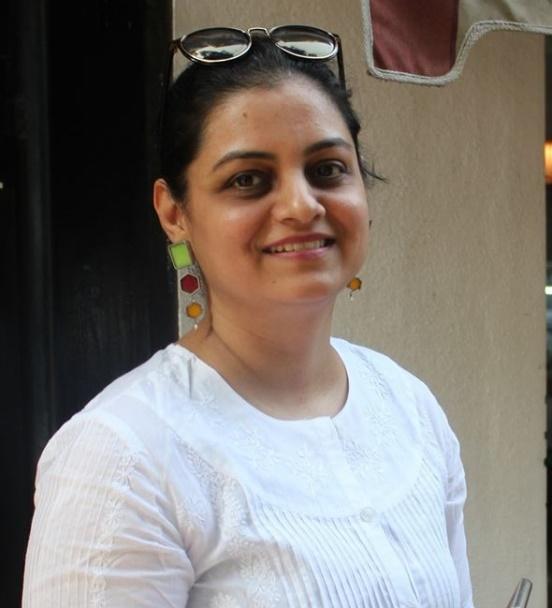
Anupama Raju

A land of eternal dusks, where days and nights are just shades of dark and darker. The lives of the inhabitants run parallel, yet intersect. Independent and interconnected.  The polyphony when listened to, tells stories of people who are segments of each other’s lives and yet live worlds apart. Love is poetry and poetry, a sharp blade in a velvet casing. Take for example these lines:

Blame it on the ocean,
on my frothing sea-breath,
on this opium air,
for all I can see now
are your plucked-out eyes
that continue to dream big
and become planets in your hands.

(Disorientation)

The attendant revelation is sublime. However, sublimity does not guarantee tranquility. Rather, it carries the promise of distant thunder. And anticipation. 

This is the multiverse that Anupama Raju has created out of vegetable markets that might be adjacent to flats from whose windows slivers of lives are beamed across the night sky. It is a place where memories of school days jostle for space alongside mother’s fish curry. Raju’s words echo the rhythm of Time itself. Unhurried and magnificent. She has a great eye for detail. And draws from the world around her. Some of her signature works such as the Windows series came out of her stint as writer in residence at the University of Kent where she was on a Charles Wallace Fellowship. Her time in La Rochelle in France, thanks to the residency programme by Le Centre Intermondes yielded Surfaces and Depths, a collaborative effort with the photographer, Pascal Bernard. 

Apart from the evocative visual imagery, what stands out is the use of sound in her poems.

The lady upstairs grates a coconut,
drags a chair across the room,
hopes it will drown the argument
with the other whom she cannot hate.

(Everyday Sounds)

At her hands, space, like everything else, is rendered transcendental, mutable. People metamorphose into walls, time melts and refashions itself and memories become edible. The effect is fascinating. Her language conveys the intangible longing that pervades maddening crowds and blank windows alike. 

Hailed as one of the most interesting voices in contemporary Indian poetry, Raju has been featured anthologies such as the Harper Collins Book of English Poetry, Yellow Nib Modern English Poetry by Indians, Ten – The New Indian Poets, Big Bridge Anthology of Contemporary Indian Poetry. Her works have been carried in The Hindu, The Caravan, The Little Magazine, Indian Literature, Mint Lounge, Pratilipi. Her first book of poems, Nine received great acclaim and showed her capable of, to quote Arundhathi Subramaniam, “…transforming familiar tropes of blood and longing, pain and death, into the “burnt letters” of warm, pulsating verse. Anupama Raju cuts close to the bone….”

This ability to transform extends to her presentation of the female. She engages her spaces and language to present a Calypso like persona who takes all or nothing. The demand for the absolute is unwavering and surgical. The trauma of abuse has been a great concern for Raju, who along with Karthika Nair, K. Srilata and Priya Sarukkai Chabria, has written a series of poems that deals with the body vis a vis female sexuality. The ways in which the female body counters violence with instinctual power have been presented in extraordinary language. In a powerful image, a woman wonders if using a conditioner would have helped ‘smoothen’ the systemic abuse she encounters at each step. The word conditioner being a brilliant jibe at the conditioning that women undergo. The systematic recounting of abuse is as much a mental documentation as it is defiance.   The last lines read

Next time, I will condition myself, she thought,
as she brushed her down her knotted hair.

(Conditioner)

When not writing with such smouldering intensity, Anupama Raju is a communications professional and a literary journalist. She is a great conversationalist who can hold forth on any subject with aplomb. Her refreshing frankness is reflected in the honesty of her poetry. This week, we bring you the vinegary, molten, subtle and edgy words of Anupama Raju. Here’s to eternal dusks!

Poems 

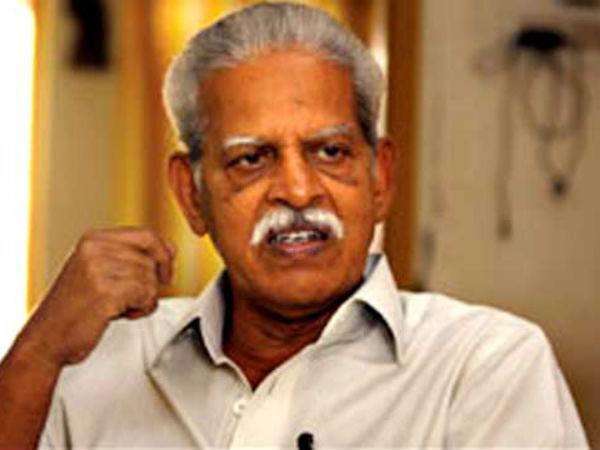
Varavara Rao

Every year, I teach Margaret Atwood’s Notes Towards A Poem That Can Never Be Written to my Undergraduate students and talk to them about how year after year, in many parts of the world, the freedom of speech and expression is squashed by unlawful regimes. I tell them about how people go missing in the middle of the night on account of an article, a sentence, or maybe just for frowning while listening to the rhetoric of a dictator. We talk about Liu Xiaobo and others. We go onto journalists who are never heard from again or are imprisoned for years either in their homelands or in distant lands where their brave coverage of ground realities gets them arrested for conspiracy, treason or dissent or just like that. Like Mahmoud Hussein of Al Jazeera who is being held in an Egyptian prison for more than three years and to mark which, the channel runs a ticker counting off the number of days he has been imprisoned. The personal losses this man suffered while in prison are inestimable. I tell the students, it hurts physically to see that ticker that says Mahmoud Hussein imprisoned for 1200 days and then to see it turn into1201 days and so it has gone on for days and days. 

And then from the poem I read out: 

This is the place
you would rather not know about,
this is the place that will inhabit you,
this is the place you cannot imagine,
this is the place that will finally defeat you
where the word why shrivels and empties
itself. This is famine.

Poems

Nithya Mariam John

This week, Dr. Nithya Mariam John introduces us to her creative realms where poems roam free and unfettered. Her works seem to be leading lives of their own- their rhythms refusing to be scripted. Her gardens are overgrown, the creatures residing in them, fearless. Nature is at her hedonistic best. The tone is simultaneously romantic and genial. 

Nithya reveals “To write is to heal….  It helps me imagine beauty in the beast, look out for the beast in the beautiful, and also believe in different shades of both.”

And it is this world that she throws open for us.

Dr. Nithya Mariam John is an Assistant Professor at the Department of English, BCM College, Kottayam. She has published a collection of poems- Bleats and Roars, edited പെൺ-ink and was also one of the translators translating into Malayalam the short stories of the Kannada writer, Vaidehi (Vaidehiyude Cherukathakal).

Poems

Kiran Bhat

One among the many odd things I have done is walking at 2 AM through the corridors of a hotel undergoing renovations, in search of water. A friend and I had booked this place online for the duration of a conference and when we reached, we found they had just completed rebuilding…the protective covering from some sections had not even come off. But they honoured their part of the bargain and let us stay there. All was good till at about eleven at night, when I thoughtlessly finished off all the drinking water. Later, finding my friend extremely thirsty, I rang up Housekeeping and Reception by turns…to no avail. So, feeling evangelical, I stepped out of the room in search of water and walked into utter and total darkness. I walked to the other end of the passage, peered down and found the reception a gaping black void. That’s when it struck me that we were the only people in this hotel- all the staff had gone home. There was no guard either. As I walked back to the room, the doorway looked like a block of light in a chunk of darkness. It was a most beautifully desolate sight. Back in the room, I remembered a bag of oranges we had bought earlier. Nothing like freshly squeezed orange juice to assuage guilt and take care of a cranky, thirsty friend.

The real reason we made the trip in the first place was not the quest for academic excellence, but rather, to visit the final resting place of a young man very dear to my friend. His untimely demise had shaken her and this trip was a search for the much-needed closure. We travelled a long, long way, on roads hewn out of mountains, the chocolate brown of the earth covering every conceivable surface. Summer was at its height and I was careful not to drink more than a mouthful of water at a time.

We reached the cemetery. There were rows of graves, marked and unmarked. There was no way to find him except ask for help at the office of the nearby church. The office was a relief, with its cool tiled floors and a ceiling fan. The priest called the father of the young man and asked him, “There are two women here to pay their respects. What is the number of your son’s grave?” The poor man couldn’t remember. And I wondered how one forgets the number of the grave of one’s only son. The priest hung up and looked sheepishly at us. “Maybe we just look at all these graves and say a general hello?” I tentatively asked my friend. She remained silent. The priest sensing her grief, sent for his assistant and they combed through a huge register and located the number. Upon reaching that simple, unmarked grave, we stood in a pool silence. Us and a raven that we imagined was the soul of the departed.

The priest and assistant came to see us off. It was quite the occasion in those parts- two mysterious women visiting the grave of a young man. I think the last event to cause this sort of flutter in the village was the coming of electricity. I mentioned this to my friend on ourlong way back to the hotel and she burst into laughter. Maybe that is what is called closure. I did not mind the dust anymore.

Personal commitments and the vagaries of lockdown keeping us geographically apart, the next time I saw her was in yet another cemetery. We were the only two people there. The burial had not happened. The prayers were still going on at church. The cemetery had no graves. Only vaults sealed with concrete, with iron rods drawn across them. In some cases, two rods crisscrossed the vault. I caught sight of my friend walking towards me.  The first thing I asked her on seeing her in person after a year was, “Why the rods? Do they imagine the dead might push open the vaults and leave?” Such is the nature of sorrow that no reply was needed or given. It was almost afternoon and we stood in pouring rain, staring into the depths of a newly opened vault, the edges jagged and raw. The darkness within made me think of the hotel corridor and that single column of light. Two very different types of darkness and two very different experiences of light. Perhaps, two very different vaults.

The search for the somewhere else is what takes us across continents, oceans and chasms. I wonder if that search ends. Or in most cases, if it even begins. We are too rooted, too afraid, too busy preparing for some inevitability that these journeys remain unembarked upon. Our stories for never setting out are almost often the same, only the characters change. The philosophy of the quest demands the sacrifice of excuses. The charm of the excuse is so great that we lose the courage to leap. I once spent ten minutes staring into the depths of a swimming pool, unable to dive in, despite there being no danger of drowning. It was the inability to take the plunge. A stranger at the pool finally put me out of my misery and pushed me in as she casually walked by.

Kiran Bhat’s poetry, like the poet himself, is not afraid of diving in at the deep end. It is fearless and speaks loud and clear. Written from various parts of the world that Kiran has made his home in, the verses reveal the poetics of a bright and beautiful mind. Having begun travelling at the age of twenty, he has been to 132 countries, learnt twelve languages, and has called nineteen corners of the world home (Atlanta, New York, Mysore, Bangalore, Madrid, Lisbon, Cuzco, Florianopolis, Delhi, Malindi, Istanbul, Tokyo, Yogyakarta, Shanghai, Moscow, Paris, Mumbai, Cairo, and Melbourne). But his heart resides in Mumbai. He speaks English, Kannada, Spanish, Portuguese, Mandarin, Turkish, Indonesian, Hindi, Japanese, French, Russian, and Arabic to various levels of proficiency.He generates very energetic conversations with creative people across the globe and his crucial participation in online events such as Golchakkar keeps the discourse flowing.

The strength of his poetry comes from the interrogations that he subjects himself and the world around him to. What interested me was that the questions he asks are the ones we may ask ourselves in the course of a day. But the answers are very different from the ones we are wont to give. Kiran answers with no subterfuge. The responses hold nothing back- just like the poet himself. this can only come from a person who is at peace with himself and in control of his identity. The incidental nature that one ascribes to identity is shattered with the conscious, lucid way that Bhat addresses his own.

The whole process of standing up and walking away from the world you have set up in a space of a few years or months and entering a new culture, handling a new currency, a new history and political custom is not an easy task. The self becomes a disciple of the mind in the process. The body- a mere vehicle- not the core of our existence as we often consider it to be. Little wonder that one of Bhat’s signature works is Kiran Speaks, a series of conversations that he has with his consciousness. Modeled on the styleof Confucius’ teachings, these poetic interrogations take on different voices. To quote the poet, “I believe mostly in the strange serendipity that comes with the chaos of our world.”

The effervescence of Kiran Bhat’s personality shines through in his narration. This why I have preferred to let him speak through the videos. This is also the first time that Mandarin is being featured on Samyukta Poetry. To convey the sense of peace that these poems bring about and because in these chaotic times, a little bit of art that navigates and replicates the pathways of the mind seems appropriate, we feature doodle art by Kukku Xavier. I think they go well together- the questions asked and answered with the openness of skies, smells of cities once called home, thirst quenched with orange juice, lost loves, slivers of light at the end of corridors and the shadows cast by death. All meet in art. All is art.

Poems

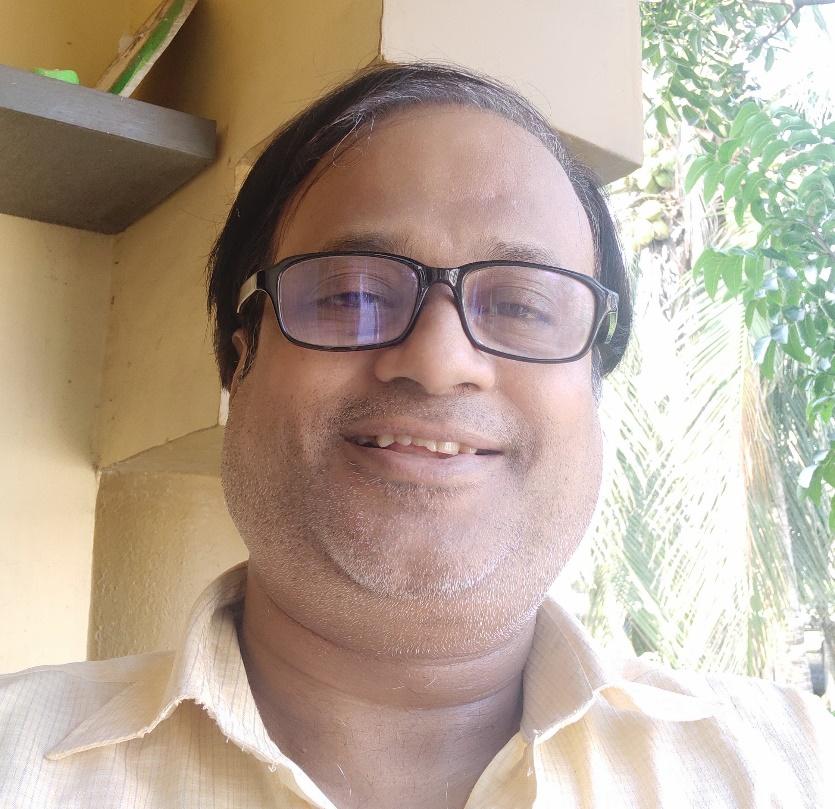
Debarshi Mitra

It has been a while since we brought you an edition of poetry. A lot has been happening in the interim. All over the world. A second wave of the pandemic is sweeping through, regimes are in for a change in America, Britain is still rummaging around seeking an equitable answer for its dilemma. Meanwhile, we have learnt that there is “too much democracy” in India. I have heard of too much food, too much money, too much power, too much evil…but too much democracy is a new one. And rather problematic too. How much is too much? Much has been made of this muchness.

And it was also during this time that there were storms gathering on the southern and northern parts of the country. Too much of a coincidence? While Cyclone Burevi ravaged parts of South India, uprooting trees, electric poles and homes, up north, farmers were gathering in huge numbers to protest against oppressive farm laws. To stop the government from uprooting their livelihoods. To use up a bit of their bountiful democracy. They have come and camped. Women, children and men. In tractors, trailers and other assorted vehicles. With enough food to lay siege to the capital and with more food on the way. They grow it after all.

A few years ago, I read about the havoc caused in the lives of potato farmers who had signed contracts with PepsiCo to supply potatoes for chips. The intricacies of corporate stipulations put paid to the financial securities of a lot of farmers. To ask a farmer to grow potatoes of a certain size is probably the plot of an absurdist play. No one can dictate how much vegetables ought to grow. Least of all potatoes. There is a reason they prefer to do their growing underground. They have got used to too much democracy.

Now there is an elected government telling farmers that they don’t understand the benefits of the laws that have been drawn up without — consulting them, including them and going by the nuances,— them. The MSP has been the cushion that has broken the fall of many a farmer and has assured them of securing a projected income. As someone who comes from a family of farmers, I know the struggles undertaken to make ends meet. The back-breaking labour, eyes that have spent more time looking at the sky than at your family, the inability to appreciate the poetry of off-season rain, the mathematics of water sharing, bund making, bund breaking, census of rats, rodents and related pests. And at the end of it all, when the crops come home, it is bliss. Till it is time to start again. It is not a wonder that my family doesn’t farm anymore. This generation is faint hearted.

It is an interesting age to be alive in this country. The most intelligent people govern us. They know everything- about everything. The farmers do not know about farming, the minorities don’t know about citizenship, students do not know how to study, teachers do not know how to teach, comedians don’t know how to crack jokes, they only offend the apex court…I can go on…but there is poetry to come.

What sort of poetry must one write at times like these? When your trust in governance is a sliver of soap under a waterfall and humans have been battling the cold and, in some cases, old age to wrest some form of control over their own destinies. When the world’s largest democracy realises that it has too much democracy,what sort of poetry do we write? Angry? Mournful? Witty? – there—now there is too much of choice. Perhaps we should ban buffet spreads as well.

India in these last couple of years reminds me of America in the Vietnam era. When much of the populace was out on the streets protesting and asking that the violence stop. The tone-deaf regime is yet another stark, staring similarity. It is quite telling that in the ages that followed, amidst all the protests, the activism and the cultural upheaval, what stood out was a music festival in the middle of nowhere, on a sprawling farmland- a festival that set out to sell tickets, but then became free, where the audience helped construct the stage and some stayed back to clean up after. Where for the better part of a weekend, there was music, music and more music. Well, that and a lot of psychedelic drugs and love. Woodstock in 1969, brought the biggest names in music who set anthems for lost youth.

Queen, Jimi Hendrix, The Who, Ravi Shankar and Santana were there and so was Janis Joplin- with her persona- a voice way older than her age and pain that knew no name.  “Freedom is just another word for nothing left to lose”, she sang in Me and Bobby McGee, a rendition of Kristofferson’s words. And listening to it in these days of constricted throats, I am inclined to believe.

And if it is the power to convince that I am looking for, then I needed to go no further than young Debarshi Mitra, who writes,

You close your eyes
and draw a blank.
The fog is everywhere
around you.
The past continues
to keep you at bay.
Your dreams begin
to turn yellow
like the flame
of a distant star.

(On a Winter Night)

Debarshi has an extraordinary voice that manages to get one to follow it down tricky rabbit holes. Reading the selection for this feature made me think of the scenarios in Alice in Wonderland and numerous smoky memories from past lives. The range that he presents is immense, using the gaps between the words in the text to fashion new narratives.

The night thickens
around the bush

not a footstep
to be heard

a snake
slithers back
to the undergrowth.

(Oblivion)

Cities, lives, time, he animates them all and sets them free- there, there it is again- that word. It stains the air we breathe and the flights of birds and the borderlessness of thoughts. The ecosystem that Joplin’s voice occupied seems to be where Debarshi’s poetry resides. The grit, the silk, the strobe lights are a part of his soul too.

There is a great deal of Cyberpunk influences in his poetic imagination and I am sure that William Gibson would appreciate the folds and neural pathways that he lights up with his ability to surprise. And he does surprise in more ways than one. even when he is extravagant in the length of his poems, he is frugal with the amplitude. The stillness of his poetry is commendable. And while he is a physicist at IISER, he also writes poems. If that is not the freedom to be, then what is?

He says, “I’m a theoretical physicist by day. My specialisation is Condensed Matter Physics. My two primary interests:poetry and Physics emerge from similar concerns, that is of understanding and gaining insight. While Physics allows one to build theoretical models for natural processes, poetry offers new ways of interpretation and defamiliarization of lived experience.”

The quest to be unsettled, to be ruffled is an artistic endeavour and Debarshi is the eternal journeyman. The bohemian in him is a kindred spirit to all the songs sung, all the notes played and all the colours that mushroomed at Woodstock decades ago. Those are the songs that last- full throated, bloody and unabashed. His voice belongs to jazz music and vinyl records.

When the common man out on the streets resists with all his might, then the powers that be must sit up and take note. That is the ultimate rule of a democracy. In a land where increasingly symbology, citizenship, history, love, the right to marry- much of what makes us who we are is being dictated, food is a very important frontier. For a regime to dig in its heels and wait out the siege in hopes that a bitter winter will send protesters away, it must be that convinced of its righteousness or of the weakness of the intentions that oppose it.

Perhaps India is ready for its own brand of the Woodstock. A place to sit back and wonder how everything has gone so wrong and when. To throw strictures to the winds and also the rules that govern love- to dream of times when in the span of the same year, migrant workers did not have to walk away from the capital and farmers did not have to march in. There wasn’t too much democracy in that, was there?

“Who you are is what you settle for, you know?” – Janis Joplin

Sonya J. Nair
Editor

Poems

Nishi Pulugurtha

Some days are like that. Perfectly normal. The sun seems to be going about its usual business of glaring down at us in varying degrees of ferocity, the stray dogs mill about on the streets looking as puzzled as ever with their mouths open, yet picking their way across roads with the care that comes of practice and bitter experience. Old men balance things at impossible angles on bicycles and ferry them with the care that comes of practice and seeing mud streets of their youth grow into four lane roadways and the bitter experience of what happens to those who don’t learn from what happens to dogs…. Younger men cross roads feigning nonchalance at the careening traffic. Most people seem to want to get to somewhere that is not here. Fruits, vegetables, restaurants wait patiently. Dust doesn’t distinguish or discriminate. Humidity seeps into crags and crevices, furniture swells. The sort of day when thirsts seek only water. The day seems perfectly normal, poised to drown itself in the polychrome of dusk. But you are not convinced. There is that strange feeling niggling you. Like a gnat. Like a particularly determined mosquito.

On a day like that, afflicted by what I can only call midsummer madness, I ventured out in my car, with the sun almost instantly leaving salt pans on my lips. Apparently, much of the city had the same idea, as people were out in full force, traffic backed up quite a distance. It felt like a pressure cooker had been left on the stove and there was no outlet for the steam. Even with the AC on at full blast, I could feel the blush of a migraine coming on. Something had to give. Something had to break the stasis.

That’s when I spotted a young man, with glorious hair riding pillion on the scooter right ahead of me. The sun was glinting off his hair, bouncing off in different shades of brown. I was mesmerized. The traffic lurched ahead and, in that instant, I enthusiastically stepped on the accelerator and rammed the scooter. In an instant, the world around me changed. The torpor I was experiencing, the migraine that was hovering about, all vanished in that moment of sheer fear.

The scooter had a broken tail light. No one or nothing else was hurt. Except my pride. I apologised and offered payment and thought to myself about the transience of life. Where one minute ago, I was actively seeking out this head of hair, now, it was bouncing around before me and I had absolutely no interest. We bid our goodbyes and went our ways, the traffic eased up. Life flowed over the temporary chasm and left no trace.

In my car, I played some music. And the very first song was Tum pukaar lo…tumhara intezaar hai (Call out to me, you are awaited)from the 1969 Hindi film Khamoshi. Sung in the soulful voice of Hemanth Kumar, the song has a very interesting play of light and shadow. The protagonist, who is a nurse in a mental care institution, has effected a miraculous recovery of her patient Dev. And has in the process, has fallen desperately in love with him. One evening, she is on her way to his room with a gift on his birthday, which is also his last day in the hospital. His parents meet her and thank her. They tell her they will come the following day to collect him and that they have arranged for him to marry the girl whose rejection had caused him to lose his equilibrium. She is shaken by the news. As she slowly climbs the stairs to his room, the shadows from the banisters create bars on her body. Her shadow precedes her into Dev’s room where he is facing an open window and singing of love and of the long wait. Of the desperate silences that seal lips, the narratives of the heart that remain untold, of the nights spent in wakefulness. We never see him. Only the shadows that grow bigger. She finally leaves clutching her gift- a copy of Kalidasa’s Meghdoot.

The Meghdoot is the story of yet another interminable wait. Of a Yaksha banished for neglecting his duties as he was enamoured by his wife. Spending his time atop Mount Kailash, he chances upon a rain cloud and asks it to deliver a message to his wife. The poem that is 111 stanzas long, is essentially the roadmap to the way home. The Yaksha narrates in loving detail, the trees, grass, plants, fountains, rivers- and everything else that the rain cloud will meet on its way. In the end, the banishment is revoked and they are reunited.

The choice of this ancient text as a gift serves to encompass the story of the nurse who fell in love with her patient and thus in an ethically complicated way, both neglected as well as overzealously performed her duties. The shadows cast on her and the walls that surround her in contrast to Dev who stands facing the breeze suggests the shape of things to come. Of the madness that waits just outside the cognitive boundaries of the mind, and which while imprisoning the body, sets the mind free of ties, memories and time. What is time if not a wait?

I have loved the idea of the wait. The many meanings it acquires. In life, in poetry, in art. Dom Moraes writes in Merlin

Centuries I waited to be called.
I am now sleeping in a maiden,
Bruised with kicks, the cruses of my eyes
Once filled with holy oil by Arthur.
Brimming with mucus and tears.

The Pendragon said I would never die.
This is no longer good news.

Which took me further back to the epigraph of The Wasteland, to those lines from the Satyricon  by Petronius where the Sybil of Cumae having erroneously asked for eternal life without eternal youth, waits to die…hopes to die.

The wait is a very certain part of our daily lives. From waiting for the mundane, banal things to happen everyday to waiting for a prayer to be answered, to have a miracle happen…we all wait from one heartbeat to another. While living in a fourth floor flat in Mumbai, I have heard the sounds of the wait in the hollow cough of our taps before the day’s water supply trickled in, having meandered its way up three floors and several families. I have seen the wait become a sinuous, winding organism at the approach of a fast local train at peak hours in Mumbai. The wait is present in flights as well at arrivals in airports. And in some cases, at the departure gates as well.

It takes a very old soul to treat the wait as an ally. To turn away the frenzy that mortality induces. To find circuitous routes to the soul. As AK Mehrotra points out,

….Our days

Filled with insubstantial things,

We dream to make up for lost time.(Summer Notes)

This is also what interests me about Nishi Pulugurtha. The sense of peace that pervades her poetry in the face of the loosening grips on realities, on claims to the self, on places. Reading her verse makes one feels like she speaks from a very alien plane that is confoundingly rooted in our everydays.

There seems to be a stillness
No breeze, a sombre silence
That is undisturbed
A pause, a break.

The wind decides to hold on
A bird here and there
Not a sound
Weighing things.
Dead leaves, twigs here and there
Broken pieces of glass
Littered, left.

(Pauses, published in Muse India)

The structures of her poems, generally jagged, with spaces denoting pauses, are complex. They mirror the workings of the mind. Lucidity and sharpness characterize her lines. The day to day business of living preoccupies Nishi.

But it is while writing about memory or the slow slide towards its involuntary erosion that Nishi is at her best. When asked about this, she revealed the extent of her commitment.  “…when I am writing about Alzheimer’s – I write about my personal experiences as a caregiver, about the changes that came in my mother over the years. My aim here is to create an awareness about it. I decided to write poems on it because it affects me a lot.

I should also mention here that I am an Executive Council member of the Alzheimer’s and Related Disorders Society of India, Calcutta Chapter. I have written on the subject for various magazine, newsletters in India and abroad, edit the newsletter of the ARDSI National and speak on the subject at various conferences on the subject too.”

They are white
I like the red
I like the other colours
Some have small holes in them
I look at them
Take them out, unfold them
They lay spread on my bed
I leave them there
I am looking for something
They must be here inside the almirah
Why is it opened?
Someone must have opened it
Why? Was someone looking for something in there?
I think someone meant to take away mine.
I take out some more sarees
I need to put them away safely.
Safely.

(Clothes: A Poem, published in Mad in Asia Pacific)

The state of things left as they are, with no memories to qualify them, with no associations that bring their history is a painful one. One that Nishi poignantly conveys. Her keen sense of observation has made the world she occupies into her subject matter. She writes of railway stations, of electricity bills, of festivals and even the humble bitter gourd. But she transforms them into entities that are waiting to germinate. To seek new soil to grow into their promise. Her verse promises a redemption. That the stasis we see around is but a short lived one. It is this promise that keeps her world on its axis.

These promises, big and small, kept, broken, continued…help us keep a hold of our days and nights. The promise of a crystalized day dissolving into a Byzantine night is what we look to the heavens, to the clocks and to our watches for.

In the end, what is time if not a promise?

Sonya J. Nair
Editor

Poems

Sandra Kolankiewicz

No more oceans or rivers, which can help
only so much. Forget the cliffs with the
views or the tops of mountains and ‘off
like a bird.’ They can mean just something when
we need everything, distracting with their
beauty when we need hard ugliness to
bloom, the lily dated, inefficient.

(Tasked) https://www.shoutoutuk.org/2014/05/03/three-poems-by-sandra-kolankiewicz/ 

I rarely write about the pandemic. Sure, I buy my masks and sanitize the fingerprints out of my palms…my life-line is almost eroded from all the rubbing- I now know the art of altering destiny. But I don’t write about it. Somehow, I have deluded myself into making this into a waiting game- where I meet my friends in a controlled environment, eat at selected restaurants, speak only to familiar people and never ever shake hands. A hug is an act that is deliberated over and over as something that might not just encroach upon personal space, but also entail endangerment. So, it was a waiting game. 

Until that is, India erupted into a rash of epic election rallies, pilgrimages and all forms of intense public participation that required sumo wrestler-style physical contact.

People found time and mental courage to yell slogans through wafer-thin masks, take a dip in the holy Ganges because this festival comes only once in twelve years- never mind that the river was there for centuries- and is still flowing without realizing that it is part of a festival that peaks once in twelve years- and what is a twelve-year cycle in the life of a river that flows through three countries and melds into an ocean. Of course, what is a country for a river? Just another pebble to flow over.

While people were converging at election rallies and river banks, I was rubbing my hands and pretending it was a waiting game. And then, suddenly, we were having the worst humanitarian crisis since the Bengal Famine of 1943. Which was the worst humanitarian crisis in the subcontinent since the Great Bengal Famine of 1770. To call a famine great is, I suppose just a way to distinguish between two famines in the same location. While a famine is not an epidemic, it can lead to one or be the cause of one. And like an epidemic, it is also often, man-made, the result of unimaginative governing actions and a general lack of direction and compassion. Sounds a lot like the situation that we are in right now.

Sometimes, my friends call me up and ask if I miss going out. Because before all hell broke loose, I was the most compulsive ‘go-outer’ you could find. I was forever out there- my home was a place I stopped over before the next time I headed out. It could be to the same place again, the same restaurant, the same mall- to the movies, to the bookshop to gawk at books and some magnificent stationery, to the church to sit in absolute silence and contemplation- to the market- I rarely loiter around in the market. There, I am focused- a woman on a mission- because in the market, they are looking at you, calling out to you- hoping to make a sale, offering you what they think you imagine is a bargain- and I who don’t use a lot of stuff, I am wasting their time. Their time is their money. And also, because, I have to compulsively answer anyone who calls out to me. I look at them and politely say no thank you. And I hate issuing steady refusals.  Or because sometimes get stuck into buying things I don’t know what to do with- like a kilogram of tapioca I bought off a woman at the market just because she looked like my grandmother.

I tell those who ask me that I don’t miss going out. I stay at home and listen to the birds, work from home, read and wonder what I did when I went out. I watch movies online, and realise I can do without the popcorn that I thought I absolutely had to have. Recently someone told me they went to a movie hall to watch a film and I was surprised. “Do people do that still?” I asked. I can’t seem to understand the idea of public transport, especially autorickshaws anymore. How does one think it ok to get into one- that’s what I keep thinking. And gradually realizing that this is most probably my own form of trauma that I am dealing with. The loss of a certain gloss off the surface of my life. The acute awareness of the singularity of existence.

It has become important to tell yourself to be grateful you get to stay home. That you are putting yourself out of harm’s way and in the process, helping stop a pandemic in its tracks- so you don’t suffer from survivor’s guilt or the intense awareness of not having to earn from day to day. It is a form of morally ambiguous respiration. And a peeling back of the eyelids to stare directly at the velocity of noise that is generated. Of propaganda. Of self-righteous misleading and soap-opera theatrics and tears that pervade the air waves every day. In lieu of a planned, reassuring system of preventive care.

India’s vaccine diplomacy, procurement policy, credibility of news, the worth placed on the lives of its citizens- all look like they have a long way to go. But go where? In which direction? I have people telling me about people disappearing from their contact lists, entire families laid low, children losing both parents… when the world get a handle on this situation, then the social and psychological cost of the pandemic will set us back by a couple of decades. New and intelligent policies will have to be devised for children orphaned, for families who have lost the earning members of their families, preventive measures to stop possible exploitation through trafficking of various kinds. What sort of society will be growing out of these cuts remains to be seen. But in the absence of a conscientious social welfare and watchdog system, the future is as bleak as the present.

There is nowhere to go and lull the million voices that you keep at bay as you go from wall to wall, doing your daily chores, grateful to be alive, rubbing your hands- in a conspiratorial gesture to stay alive, dreading the next disappearance from your contact list, looking at obituaries of strangers in the newspaper and mentally checking their date of departure to then guess if they might have died of COVID-19 or other reasons.

Who knows what will turn up in your Sent Mail,
under your trolling history, on your

caller ID, slaughtering what cow, the
counter a mess after you’ve descended

at midnight to hear Agamemnon on
his wife, Tantalus on thirst, Sisyphus

pushing his load even over a meal
as you eat your way back to those who wait.

(Voyage of the Ambien Eater)

…says Sandra Kolankiewicz. In her these and many, many other poems, Sandra looks at mortality as though she holds it in the palm of her hands- as though she is holding a moth- (a word that sounds very much like death in Hindi)- fascinated and terrified of its colours and designs. Sandra’s world is one that acknowledges mortality and phantasmagoria as faithful companions. The apocalypse is around the corner and it may not be such a bad thing after all, she thinks.

Her love has the acidity of lime and the departed come back to stand at the foot of the bed just to remind people of what could have been. The immediate rootedness of Sandra’s poetry is carried on the shoulders of an aching knowledge- of responsibility, of culpability, of wistfulness, an ardent desire to tamper with the dynamics of Time.

I can’t write of the oceans
without seeing that landmass of
plastic swirling in the Pacific,
bigger than Pitcairn Island, the
consequences of mutiny against the
natural world. Squeeze a rock,
drain the dirt to get plastic.
Scrape a sticky flower center for the
smell of forget what we deserve.
Likewise that sacred cliff
from which the ancestors watched
us from above had no means to
protect itself, face blown off to
reveal the images of idols, their feet
down in the clay on which we stand
to admire them.

(Earth at Apogee) https://fortnightlyreview.co.uk/2020/09/earth-apogee-curbed/

Says John Guzlowski, about The Way You Will Go, Sandra’s collection of poems,  “We’ve been taught to expect comfort from our poetry, the poet telling us about the truth at the heart of our yearning: the mother who loves her child more than anything, the father who returns from war to find his house still standing. But this is not what Sandra Kolankiewicz wants to talk to us about. She is the poet of mysteries, the real ones that hide in the most common things (a pet rabbit, a child’s dollhouse), and elegies for what we’ve lost and what we’re losing and what we will lose. She has the gift the great poets have, the gift of telling us what we’ve lost in language so beautiful and rich that it almost makes us forget our loss.

You’re probably right; no one counts but you.
We have no credibility. We’re the
people in the rabble who understand
if we didn’t impose, you’d ignore us,
wouldn’t step up to help, would even sniff
like a gentleman who sneers when he is
not. If you had been educated on
curbs in this city, a result of where you
are from, off the normal boundaries, your
childhood an estate with no sidewalks past
the bus lines, you would know that slaves cut them
from single slabs of rock, something you have
always taken for granted as if mid-
way between the walk and street just for you.

(Curbed) https://fortnightlyreview.co.uk/2020/09/earth-apogee-curbed/

The other day, during an online meeting, a colleague coughed- twice- and I asked her in a playfully-fearful voice, “Are you ok? You seem to be coughing a lot.” Laughing, she answered- its just a common cough. And I said, “This is not the common cough anymore. This is the uncommon variety. The common sort of cough is the other one.” Common, uncommon- everything is being turned on its head. Even pineapple upside down cake has begun making sense.

In such a world, the verses of Sandra Kolankiewicz come across as pungent, hard hitting and unapologetic. They speak plainly about the imbalance that exists between a world that should have been and a world that is. She doesn’t nurture fault lines. Rather, she holds them out- jagged and broken- to be thought about within the confines of walls, in the engulfing darknesses of movie halls or jammed between soft apologies and refusals while walking through a market when an old woman who looks like your grandmother stops you and offers you what she thinks you will think is a bargain. And today, the way the world is…by God you would take it.

Sonya J. Nair
Editor

Poems

Ricardo Plata

It threatens to rain on most evenings these days. The sky begins to brood around 3 pm, the breeze refuses to blow. Everything is static. Sullen. Even the slightest movement makes perspiration break out. A stray salty bead or a veritable soaking . . . Rorschach patterns of sweat stains on clothes.  People go about with shiny faces and mostly bewildered expressions as though asking “how did it get so hot?” There are wistful reminiscences about past decades when it was not so hot and the obligatory anger over climate change before sheepishly reaching for the AC remote. This is rounded off with the dire prediction to watch out for April and May when it can only get hotter. 

Meanwhile, it becomes darker outside. The birds decide to pack it in and go home. Dogs walk about listlessly with their tongues hanging out. An almost ominously pleasant breeze stirs the tree tops and the trees…wily creatures…use this opportunity to shed a few flowers and dry leaves when no one is watching. I am quite amused by this behaviour of the trees…hardly any indication of rain can go by without this sort of surreptitious shedding. 

On such semi-recumbent evenings, as I drive home from work, I imagine rain clouds gathering force, preparing to bring on their fury, that the water will cleanse the city and by extension, my car. I also think of the time I stood on the edge of rain. It was an afternoon; I was travelling in an autorickshaw. It was raining beautifully. When I reached my destination, and got out…with no umbrella, I realised that the rain was falling on only one half of me. I looked at the road and found that from the point where I stood, it wasn’t raining any further. I had stood on edges of precipices, roads, deserts, razors…but not at the edge of rain. Though there were at least fifty other people standing there, I would like to believe that only I noticed this. That it was an experience sent only for me.

A really good rain is like a fierce argument. It starts slow, comes down hard and determined and long after it is over, it continues in rivulets, in the ruts on mud roads, in the splashes on passing vehicles…everyone takes a bit of the rain as they go along. And you go on hearing its echoes long after it has stopped. Watching the rains makes me really thirsty. Like I ought to open my mouth and swallow in long, deep gulps, the sheets of water that flow down ridges, shingles, eaves and downspouts of houses…the metaphors of never quenched thirsts sit alongside those of sweeping deserts in my mind. And later, much later, I can hear the gurgle of water, cheered on by lusty frogs, draining away into a thread-like brook behind my house. That is of course the monsoon that imperiously visits these shores in June and July or the rain brought on by whimsical depressions off the Arabian Sea or the Indian Ocean. Off late, these have become typhoons or cyclones and have made the enjoyment of rain an exercise in guilt and entitlement. Now one looks for innocent rains. Those which don’t bring devastation and displacement with them.  Rains that can be enjoyed without fear. Like the ones they used to anticipate every year in my village.

Those rains would mean plentiful crops and when I saw the young paddy stalks bravely standing up, craning their necks to the sky, I used to think…this is what rains can do. There was a well by the fields…where the women would gather every morning and evening. The more active ones would draw water for themselves and for others. There was a lot of chatter and laughter and possibly power politics that I was too young to understand. All I knew was that my aspiration was to grow strong enough to be able to draw water from that well, pour it into a plastic pot and carry it on my hip to the house. The feminist politics of water bearing hadn’t percolated my consciousness. I was after all 6.  When it rained, this well would fill to the brim. And on occasion, overflow. It was frightening and fascinating. The women could just skim the water off the top of the well and be on their way. I used to wonder what would happen if one jumped into the well at such a time…would they be able to swim from edge to edge? Mind you, the well wasn’t a very wide one.

So, a couple of days after a torrential downpour, I went down with my aunts to the well. Sure enough, it stood like a beacon of light…a ring made of liquid silver…water sloshing around the rim…spilling over when people skimmed water. As the women were waiting around for the rest of the posse to arrive, no one was paying me any attention and out of sheer boredom, I floated a pot onto the well. The pot bobbed, fell to its side and began taking in water rapidly. All of us watched in a mix of horror and tension as the pot took in more water, moved to the centre of the well and began a gradual submerging. It turned upright and began its journey down the neck of the well. For a while we could see it…imprisoned in water…water that seemed semi solid…like jelly. No one dared look further.

I was forever banned from going anywhere near the well.

Decades later, this year, when it threatens to rain on most afternoons, I have, for no conceivable reason, been thinking of that day. The concerned look on my grandmother’s face when I was brought home, a frightened, shivering bundle of a child…the days of fever that followed…that had nothing to do with the monsoons that I was generally so vulnerable to. It was the sinking of the pot. Something that happened so quickly and so casually…like passing a cup of tea. The eerie silence that followed the final burp with which the pot went down. The matter of fact-ness of its sinking. That no one dared go rescue the pot. That the rains, the well, the water…who were my friends had another side to them. That things can transform so quickly and bare their fangs. It was fear. For the first time I felt fear.

As the world squirms in the grip of the vast unknown…of a pandemic, of the miasma of propaganda, of suffering…such suffering…one might wonder about what something familiar such as the rains might bring. Some hint of comfort? Some promise that certain things are a constant? I read these promises in the poems of Ricardo Plata whom we feature this time.

He brings in the known, the experienced and it feels talismanic as we hold his words in our hands. He writes in Spanish and is read in translation. There is an intense musicality in his works that I have gleaned with my rudimentary understanding of the language.

To inhabit my body
that cell with thin bars,
I must admit,
a body is a prison of memory.

(To inhabit my name)

https://poetryzinemag.wixsite.com/poetryzine/post/ricardo-plata-to-inhabit-my-name-and-other-poems

Benedictions, homecomings, love, its tangibility and the vast journeys the mind undertakes … these form the core of his poetry.

He writes in Mario likes Instability

Mario recognises his solitude,
is identical to mine,
which leads us to live in circles in flames,
searching again,
and thinking that the love of one’s life
is found
when everyone falls silent in the middle of a party.

His lines are youthful, they carry the boisterousness of a raucous life that the young enjoy, or aspire to. There is a celebration of the multitude. People in their variegated existences, come and go in his poems.

In My Parents Brought Me to Life to Die, he talks about birth, the promises that life is supposed to present, the gardens of papier mâché that he makes… “my skeleton is made of bread and promises, and my future is a concern that I never survive.” That it rained on the day he was born as though it was a baptism…as though it was a welcome.

The haunting sensibilities that his poems present, in their hope that is offset by desolation, the sounds fading into silence, the lives of people nearer to his home, that are for me, a world away…fill me with a sense of wonder at the sameness and the uniqueness of experiences.

I found Ricardo Plata to be apt for uncertain times like these.

Though the rains threaten…it rarely does rain, the sky broods…the trees shake themselves free of leaves and flowers, the birds go home and then, like a child who once set a pot adrift in the middle of an overflowing well, the clouds recoil and move away. Bearing too much knowledge. Never to return.

The pot was fished out when the waters receded.

Sonya J. Nair
Editor

Poems

Poornima Laxmeshwar

Sometimes, a beam of light from the lighthouse of the mind falls on a house that floats on the sea of memories. It was an old house….nearly two hundred years old. Generations of my family lived there…so did generations of wild honeybees. There was a verandah where, in the afternoons, the most wonderful breeze swept in. It lulled the coconut palms, the Gulmohar tree, the cows and me- a very tiny kid then- into the most delicious stupor. But I was scared of sleeping on the verandah. My grandmother had warned me about burly gypsies who carried gunny sacks and stuffed sleeping children into them. And being the gullible kind of grandchild that I once was, I believed her. Why would I not? A grandmother who made the most wonderful dried, salted mango pickles was never to be disbelieved. I remember squatting by her side as she laid out those slivers of mangoes dipped in brine on a straw mat. And when they were finally, properly set, she gave me leave to eat as much as I wanted. It was in this house that I saw chickens hatching, spiders with silk purses, cows giving birth, moonlight streaming through squares of glass placed between terracotta tiles on the roof. 

Such was the impact all this made on me that sometimes, I have found myself retracing these paths, hoping to feel a sense of wonder, glee or maybe love. Once, as a newly minted Assistant Professor, I walked around the campus with my colleagues and stopped short before salted mangoes drying on a straw mat in front of the canteen. I picked up a piece and tasted it. There was just salt and mango. And the distinct aftertaste of knowledge. Always a bad idea. 

The house is no more. The people are no more. My grandmother, bless her, lives elsewhere- far, far away, her world shrunk to a bedroom. And I who remain, think of gypsies bearing gunny sacks full of small children, catch clusters of memories that like the seeds of the Gulmohar, explode and shatter on silent afternoons. On really dark nights, in my mind, the house stands bathed in liquid light.

This is why, reading Poornima Laxmeshwar is like a personal pilgrimage for me. Her lucid use of memory, the style of narration, the astringent touch of knowledge resonates with all those who stitch their past and present.

On pleasant January mornings, Kaku wakes us up to help her with the sabudana sandige. She prepares it as winter trails away with the heaviness of Ajja breathing in measures. The plastic sheet is laid with four stones at every corner, indicating that it is always easy to control things that don’t really matter. Suddenly, the air is filled with the pungent odour of green chillies, (overused) to add some life to the otherwise ordinariness of sabudana, reminding me of Kaka’s life—four daughters in a house full of chores. I scoop a spoon full of the mixture, a transparent jelly with Bolshevik objectives, unheeding. I carefully place it on spots marked by Kaku that appear like hatched plans of sureness.

….

These need three days, she declares. Three days for them to go stiff as corpses and then suddenly spring to life at the touch of hot oil like blossoming lotuses at dawn. Such is the vagueness of existence. Kaku plans her kumbalakayi sandige while my mind stays transfixed on Peter Rabbit.

(Starchy memories are the toughest to wash away)

In a conversation with SamyuktaPoetry, Poornima revealed, “For me poetry is a means to question all that I fail to fight otherwise. It is my angst summed up. I write because that’s the only lens I have to capture the failures of the world. Failure specifically as it carries hurt and helplessness. I love writing about mundane and how extraordinary they are as experiences.

As much as structural peculiarities are concerned I write free verse and have now shifted to prose poetry as a form. I am also experimenting with forms to understand how they can create an impact on the written word.

I am inspired by Indian poets and folklore.”

Her chapbook Thirteen is a study in the ways relationships tinge our actions and make us choose our quests. Her poems are like archaeological sites that reveal a once bustling civilization. Between clusters of densely populated thoroughfares, one finds shards of relationships and shadows of afterthoughts. There is an unspoken challenge that she throws down when she asks uncomfortable questions, seeking to unlearn all that has been inked upon bodies and brains.

I am hanging the shadow
On the clothesline;
Clip it tight
With the ones I purchased in the local plastic store
For 45 rupees per dozen;
Couldn’t negotiate more,
So I had to let go;
They say quality products come at a price,
At times even women fail at cheap bargaining.
(Shadows for keepsake)

Poornima’s relationships are taut- the easy banter, the roses and lilies and saccharine tones are absent and, in their place, one finds tart retorts and brooding revelations.

Smells take me back to people. Like Amma always smells of turmeric, Appa of teakwood furniture, P of fresh weed, and him, beef. No, I haven’t yet confessed that his odour repels me. It reminds me of slow meat cooking and the spices that run into my nostrils deeper than childhood memories. And so, every anniversary, I gift him cologne that contains sea-salt and the quiet secret of lemongrass. As for me, I smell of anti-depressants that blend like detergent in hard water.

(Apple cinnamon fragrance pouch)

Her vocal presentation, unsettling style, the presentation all serve to unseat the reader who reads these prose passages and finds they are poetry after all. Her works have that rare ability to stop you in your tracks with the force of the images they hand you.

From my window
I see the orange circle
Escape in a blue quilt
Quietly without leaving any traces of its existence

(Melancholy)

Her writings resound with the tang and zest of the storyteller. She layers her narrative with intense imagery, places her characters and speaks directly and distinctly. Her allusions seem like statements due to the force with which they are delivered. I read her lines and ended up thinking about the people in my village- their lives, their grouses, their peeves and their triumphs and tragedies- as told by my mother and her mother before her. As much as Poornima is a poet, she is also a storyteller. And her art is that of the dastangoi.

She presents the dilemma of the millennial- the discomfort, the guilt of an entire generation who are coming to terms with the struggles of breaking their conditioning on one hand, and combating the swaggering sureness of the iGen on the other. This unlearning comes at a price- her voice seeks but doesn’t find a home anywhere. The restlessness is even more apparent when placed against the structured steadiness of the voices that respond to her questions with silence or stone walls.

Under the shade of the old peepul tree, you draw a square
with boxes that behave, stay within boundaries like good
girls of our Brahmin family. I choose four pieces of a
broken glass bangle as my set to play with. I have to reach
the centre. But isn’t that the goal of every game? Getting
to the core to ask the futile question: Now what? So, I
choose a different game. I flick the money cowries as high
as I can. I catch them with the vigour that life possesses
while holding the nerves on my neck until I go
B
L
U
E
When I think I am done trying all the cowries, love comes
crawling like an attention-seeking infant.

(Set of four cowries)

As I sit reflecting on the remarkable poetry of Poornima Laxmeshwar, I think of my own grandmother who carries histories in the lines of her palms. Who was once young and who then grew old while trying to get by, who loved in her own vocabulary and has never read a single line her whole life. Who can only guess her age and those of her children but knows the ages of the trees in her backyard. Who sat by and let a child have her fill of salted mangoes and ignored the hundred chores and a hungry family to patiently hold open the lid of the wicker basket and show the child how chickens hatch.

Ajji wore her nine yards meticulously. Her concern was to show not too much of her strong legs that knew the weight of the distance between one abortion and another. But it was gold that she dreamt of, more than bearing a baby boy. The big nathani was reserved for festivals. Every time she wore it, the weight of the emerald and gold pulled her nose down but her pride swelled like her womb did almost every year until the doctor warned her about fragile bones going hollow. ―16 times,‖ she said. I no longer liked the analogy of sweet sixteen. The last time I saw her, Ajji lied still with her toothless mouth open, dressed in a worn out nighty and a shawl. The nathani’s fate was undecided. Either it would adorn the village deity Mahamaya’s face or melt as easily as our ancestral history. 

(The secret pocket in the petticoat)

I want to go find the gypsy with the gunny sack and ask him to return my afternoons and my grandmother.

Sonya J. Nair
Editor

Poems


Jaydeep Sarangi

I keep my spirit within my daily clothes,
a certain poetry of moments.

(Jaydeep Sarangi)

While the pandemic rages on and seems to churn out chaos at will, there are worlds behind closed doors, glass facades, spaces of the mind where sinkholes have opened up. And the everyday has emerged from the depths to which it was relegated- as a blip in time, as a shrug in that never-ending chase after meaning and the philosophy of purpose. While the everyday has been around us ever since we can remember, it sometimes takes real effort to step out and seek it in our words, our actions and above all in our thoughts. 

Today, when histories recount a series of mistakes and the future is bleak, the everyday is what we have left. And while each person’s everyday is distinct, and an experience in itself, what the pandemic has done is to force a reimagination. To make one take a long and hard look at these days that were congealing into one and devise ways and means to find markers that would hold their place in memory. This is when we realise, how the rush of routines manages to obscure the injuries we carry, the mirrors we refuse to look into and the anxieties we defer facing. 

The pandemic has brought these to the surface as there is nowhere to go, nothing else to do or no one to visit- nothing that would take the edge off. While things are improving and contacts are being re-established, the almost virulent participation in social rituals and those ‘obligatory’ attendances have become optional or avoidable and, in some cases, one no longer gets invited even. The everyday is what we have left. In it lies the joys of discoveries. I suppose the infinite experiments in bread making that the pandemic spurred are a case in evidence and so are the innumerable Dalgona coffees that did the rounds.

Lines of people walked home, some made it, some did not and by that time, those that got home began travelling back because there was nothing much to look forward to. Lines of people crisscrossing each other like fate on palms and these everydays joined the vast rivers of time that people found they had. And just when they thought they knew everything there was to know about themselves, here was knowledge at its most intimate and personal. I sometimes think that it is the self that humans find most terrifying. The knowledge of what lies beneath veneers and lacquered surfaces can surprise one.

This is perhaps why, the Nobel Prize in Lietrature for 2020 went to the everydayness and intimate selves of Louise Glück. For “her unmistakable poetic voice that with austere beauty makes individual existence universal”, as the citation reads. In these days of political and inclusive choices, when a white, heterosexual poet gets the Nobel, it makes one sit up and take notice. Glück’s poems are steeped in the conversations that wrap themselves around love- or the lack of it, the cold scent of danger that singes nostrils, the preoccupation around the casual violence that comes so very naturally to humans. Words are used sparingly, parsimoniously. But they are words that you and I regard almost everyday and possibly discard in favour of gilt-edged ones. Many have questioned the choice of Glück for the award, seeing as there may not be the sweeping grandeur of emotion or construction that one expects from a ‘Nobel’ prize winner. And therein lies her merit too. To speak of these febrile worlds and still letting them lurk in the shadows is exceptional poetry. There is no redemption. These worlds are free of the burden of enlightenment, of knowledge, of that supposedly beautiful light of salvation.

A Fantasy

I’ll tell you something: every day
people are dying. And that’s just the beginning.
Every day, in funeral homes, new widows are born,
new orphans. They sit with their hands folded,
trying to decide about this new life.

There are the interminable stretches of days that are indistinguishable from one another. What I noticed in her poems was the way time seems to be in limbo. The heat that emanates from the streets of back-of-beyond towns hangs over everything, making it all seem melted and malleable. `The ways families come in, Mother and Aunt, dubbed Spite and Malice- grief, grouses, ancient resentments, rites of passage…the grime and soot that lies heavy upon the memories of people and places is suffocatingly and acerbically put across.

Twilight

All day he works at his cousin’s mill,
so when he gets home at night, he always sits at this one window,
sees one time of day, twilight.
There should be more time like this, to sit and dream.
It’s as his cousin says:
Living—living takes you away from sitting.
…

I open my fingers—
I let everything go.

Visual world, language,
rustling of leaves in the night,
smell of high grass, of woodsmoke.

I let it go, then I light the candle.

A talk about the birds and bees between and a mother and a daughter turns into this revelation about the father- an unwitting yet vital participant in the conversation- the foreshadowing of the ways things become- degenerate into.

At the River

School wasn’t in session.
I went back to my room and shut the door
and my mother went into the kitchen
where my father was pouring glasses of wine for himself and his
invisible guest
who—surprise—doesn’t appear.
No, it’s just my father and his friend the Holy Ghost
partying the night away until the bottle runs out,
after which my father continues sitting at the table
with an open book in front of him.
Tactfully, so as not to embarrass the Spirit,
my father handled all the glasses,
first his own, then the other, back and forth like every other night.
…

When I got home, my mother was asleep, my father was still at the
table,
reading his book. And I said, Did your friend go away?
And he looked at me intently for a while,
then he said, Your mother and I used to drink a glass of wine together
after dinner.

Possibly, how little we know about the people whom we think we have known all our life. Just a couple of days ago, I found a few books that belong to my mother- Thus Spoke Zarathustra, The Collected Works of Tom Paine and The Prince. Hardbound, cherished volumes. And I never imagined it of her. It made me want to bring the books over to my shelf. To tell myself that I own a part of that presence that is no longer visible. Or forgotten. To drink that cup of wine at an odd, odd hour. It is this connect that brings Glück into the conversation of the contemporary world. She sings the songs that we wished to keep for another day.

Speaking of songs brings us to our poet of the week, Jaydeep Sarangi, a poet of great renown, whose verse is beautiful on account of the elemental bond it shares with the everyday. The rivers, streams, plants, birds that in the march of civilisaton seem nothing more than white noise, in the lines of Sarangi transform into protagonists. His poems are populated by people who are waiting. Are contemplative. Worlds move at their own unhurried pace, like a river that carries a mountain dissolved. And the river has to be a witness, as Sarangi is often called the Bard on the banks of the  Dulung, a river in Jhagram. Among his formative influences is the iconic Kanakdurga temple, the priests of which are from the Sarangi family.

From the Travel Diary

Some doors I visited
bear truths of time, maps changing.

Rivers far and near know how
I poured out my confessions.
Today’s coffee is waiting
With foam and fen, trains whistling.

In the blurb of Sarangi’s 2013 collection of poems, Silent Days, Keki N. Daruwalla says, ‘Jaydeep Sarangi gives a fresh paint to everyday living. “Small rivers” near tribal villages are his haunts. His language can be unorthodox, where a rock can turn into a “reckless flow”, but his poems are a rewarding read, with the scent of herbs coming through the pages.’ A river, a bard, coffee and love…

Love

All along the rainy earth
a wild game of love is played
at all our ears and eyes
for a result
that is never complete.

And if anyone still has doubts as to why our everydays matter, please read up on the great Idli debate on Twitter, where the humble idli, which up until now, was a rather uneventful steamed batter of rice and lentils is now the repository of South Indian pride. After all, literally, millions of idlis with companion dishes like chutneys and sambar are being consumed in South India at least on a daily basis. To have it being called boring by a white man no less- invited the wrath of people who if they hadn’t jumped into idli’s defence, would not have been able to look their sambar in the eye.

Nobel Prize, Idli, Nihilist mother, Jaydeep Sarangi do not come together everyday. Every day.

Sonya J. Nair
Editor

Slippery Doors of History

History is absences
from the present.
There’s time
when we walked pass them
a pool of blood
countless unnoticed acts
are history not written.
Text books, page after page
killed unnamed kings
leaders and martyrs
far away from the metro lines
by the magic rod of publicity.
In a salt of sea,
skeletons of ships carry mysteries.
All parts quietly wait
to be uncovered, skull after skull.

A Prayer House

I fall
From miscalculations.
I fear
For roses.
I articulate
My hunger.
I live
With my cool bones.

I am
Just here.Virtual
Time oozes out
In the rain forest.
My voices go in and out
I make the room for sleep.

I try again
Arrange for my sleep.
Sleepless night
Rolls on my pillow
I see
A sharp blade of love.
After the dream
In a prayer house.

Someone is holding my wall

With you I first toured
deep forests and ghats,
my weather was you.

Today, I watch the last leaves
falling hard against the ground.
You suddenly stopped sitting with me
speaking to them about a game.

Alone I sit. My walls fall apart.
I remember a quiet kiss somewhere
senses lapsed, only a bit of cold.

Growing Lonely

Now I stand barefoot
Among these ruins of life
With my diabetic bones
Waiting for a full song
From night birds. Social distancing
My weariness, my aging shoulders
Still wait for friends, good friends
Who have become friends of others.
I watch my doors
After a spell of erratic rain.
Always keep the keys ready.

A promise, a good harvest
Then, too long a distance.

Relationship is always a fresh attire.
I fear not arthritis, pain in the bones
But this neglect from all these doors.

Berating, deep cool berating
In my newly painted house.

Jaydeep Sarangi is a widely anthologized, bilingual poet with  eight collections in English latest being  Heart Raining the Light (2020 )released in Rome.  Sarangi has read his poems in different parts of the globe. His later readings were at Flinders University, University of Western Australia, University of South Australia, University of Wollongong, Perth Poetry Club (Australia), University of Udine(Italy)and University of Rezeszow (Poland). Sarangi is on the editorial boards of different journals featuring poetry and articles on poetry like the Mascara Literary Review, Transnational Literature (Australia), Setu (USA), Geetanjali and Beyond (Scottland) Teesta, WEC (India). He has seven critical books on poetry and edited special issues on poetry for reputed journals in India and abroad. He is guest editing a special volume with Dr Amelia Walker for TEXT(Australia). Among his recent awards, the Setu Award of Excellence for 2019 (USA). He is a professor of English and Principal at New Alipore College, Kolkata.

#LouiseGlück #Nobel2020 #JaydeepSarangi #Everyday #Machiavelli #Dulung #idli


Page 2 of 4

Powered by WordPress & Theme by Anders Norén

Facebook
Twitter
YouTube
Instagram